It’s all about the details. Pick your thumbnail image, add closed captions, update settings, and track your video performance analytics in the video library. Manage video settings. Learn more about the video library.
The word hypolycaemia simply means ‘low blood sugar’. Glucose circulating in the bloodstream is a vital metabolic nutrient: all organs combust it with oxygen to release energy for life processes. The brain is especially susceptible to a lack of it, and the consequences if glucose levels fall too low can be almost as serious as those resulting form a lack of oxygen.
The symptoms of hypoglycaemia mimic many conditions including multiple allergy and psychiatric problems. In fact hypo-glycaemia often exists side-by-side with other conditions and more exactly can be inextricable linked to them. For example, one of the effects of an allergic reaction may be to induce a sudden drop in blood glucose supply.
The pancreas gland, a key organ in food allergy syndromes, is probably implicated. Hypoglycaemia is often described in terms of insulin abnormality and indeed it may very well be a pre-diabetic (a precursor of diabetes).But the real culprit organs are probably the adrenal glands. They too secrete glucose-regulating hormones (glucocorticoids) and are part of the front line of our response to shock.
Thus hypoglycaemia is sometimes known as adrenal stress syndrome.
SYMPTOMS ATTRIBUTABLE TO HYPOGLYCAEMIA
Almost any symptom can result form hypoglycaemia, particularly if it causes neurological impairment. Some of the more common symptoms are listed in the table below. As with all such lists, the reader is warned that many symptoms can have other causes and many do. But taken overall these may give you some clues as the to presence of hypoglycaemia:
- Sudden hunger pangs
- Urgent desire for something sweet
- Feeling tired late morning
- Feeling exhausted late afternoon
- Waking in the night to raid the refrigerator
- Panic attacks
- Rapid heartbeat and palpitations
- Shaking and inner trembling
- Double vision
- Incoherant speech, tendency to slur words or gabble
- Outbursts of temper
- Extreme depression
- Drowsiness
- Negativism
- Difficulty concentrating
- Personality changes
- Lack of co-ordination
- Emotional instability
- Mental confusion
- Light-headedness
- Insomnia
- Poor academic performance
- Premenstrual tension
- Headache or migraine
- Frequent nightmares
- Suicidal thoughts
- Addictions
- Alcoholism
- Antisocial behaviour
- Pain in joints
- Anxiety
- Manic or restless behaviour
- Irritability
- Leg cramps
- Symptoms relieved by food, especially something sweet
As well as diverse symptoms, there are several disorders that may be caused or made worse by hypoglacaemia. These include schizophrenia, epilepsy, depression, migraine and asthma.
A characteristic feature of this condition is the way symptoms are relieved by sugar and sweet foods. The relief may only be temporary but the need drives the patient mercilessly. Many feel guilty for succumbing to their cravings – but they needn’t: it is not simply a matter of will power. The desire for sugar is sometimes so overwhelming it cannot be resisted. I have on occasion heard a patient claim ‘I could kill for a bar of chocolate’. These words alone are sufficient to tell me that hypoglycaemina is at work.
THE DUMPER MECHANISM
Ironically, the consumption of too much carbohydrate food causes bypoglycaemia. The exact progress of events is as follows:
1. Consumption of excess sugary food.
2. Typical hypoglycaemia sufferers eat a poor breakfast, such as cereal with sugar, sweetened coffee and toast with jam or marmalade (or even worse, no breakfast at all, which moves the patient straight to step 3.
3. This raises the blood sugar level rapidly.
4. The body responds by releasing insulin and other glucose-regulating hormones from the adrenal glands
5. Blood sugar is lowered, but usually too fast.
There is an overcompensation and the level falls too low. This is hypoglycaemia.
6. There is craving for more sweet food, soon after the previous meal.
By mid-morning sufferers need a snack – usually cake, biscuits or sweetened drinks – and this triggers hypoglycaemia in a matter of 10 to 60 minutes (remember the ’11 o’clock gap’ promoted by a well-known chocolate manufacturer?).
The new intake sets off the cycle all over again. Blood sugar levels roller-coaster up and down many times a day. Eventually the body’s ability to cope with these continuous rushes of sugar becomes exhausted. It cannot cope with or regulate the ever-circling demand and so the regulation mechanism breaks down completely.
Even doctors sometimes get it wrong and advise the patient to eat sugar, or will prescribe dextrose tablets. These methods are incorrect and only exacerbate the condition although appearing to bring temporary relief.
DIAGNOSIS
Any doctor should be able to diagnose this condition purely on the basis of the patent’s history: it is glaringly obvious if you know what to look for.
Laboratory confirmation, where warranted, can come from a six-hour glucose tolerance test.
The Six-hour Glucose Tolerance Test
The patient fasts overnight and a preliminary blood sample is taken to measure a baseline blood sugar level in the morning. He or she is then administered a loading dose of glucose, usually 50 to 100g, according to body weight. Theron Randolph argues that this may turn into a corn sugar challenge test (18), so care must be taken with corn (maize) allergics and the symptoms must be evaluated accordingly.
Repeat blood samples are taken every half-hour for six hours and in each case the blood glucose concentration determined. Note: in hospital, the test is normally carried out for a period of two–and–a- half hours; this is sufficient to detect a diabetic response but is not long enough when hypoglycaemia is suspected because the characteristic reaction takes place long after the two-and-a-half hour mark.
The results of GTT are usually represented graphically; three typical responses are shown in the figures below.
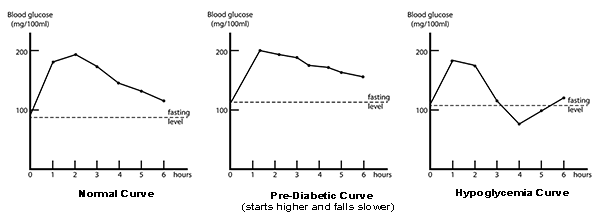
The characteristic of a diabetic curve is that it goes high and stays high, falling only very sluggishly, because the body has lost the ability to deal with carbohydrates.
Note that the blood glucose started with a sharp rise to over 50 per cent of the starting value within one hour. Then it fell steadily, but at no stage did it fall below the fasting level, which is taken as the baseline.
The characteristic of a diabetic curve is that it goes high and stays high, falling only very sluggishly, because the body has lost the ability to deal with carbohydrate.
Note that the graph rose as it should during the first hour and appeared to be normal until the third hour when it suddenly fell very steeply. Within an hour it had dropped by over 70 units. Moreover, from then onwards it remained below the fasting level for a considerable time before returning to ‘baseline’. The rapid fall in the third of fourth hour is often accompanied by pronounced subjective symptoms.
Diagnosing Hypoglycaemia from GTT Results
There are several possible responses to a six-hour glucose tolerance test that would suggest hypoglycaemia, either actual or latent:
- The blood sugar fails to rise ore than 50 per cent above the fasting level (this is rarely encountered).
- The glucose curve falls to 20 per cent below the fasting level.
- The blood sugar falls 50 mg per cent or more during any one hour of the test (usually following a rapid rise of 50 mg per cent in the first half hour).
- The absolute blood sugar level falls in the range of 50 mg per cent or lower (anything below 65 mg per cent is suspicious).
- Clinical symptoms such as dizziness, headache, confusion, palpitations, depression and so on appear during the course of a glucose tolerance test-regardless of what the blood sugar readings may be.
Bear these criteria in mind if you ever have a GTT. Your doctor is not likely to be familiar with them, and it may help you to interpret your own results.
THE CURE
Treatment depends on three key changes you should make in your eating habits. Results may be slow in coming; you need to be patient and work at it for a few weeks, the rewards will come.
1. Eat Less Carbohydrate
You must stop eating and drinking all refined carbohydrate forthwith. This means sugar, white flour and corn sweeteners (as used in cordials, squashes, colas, doughnuts and so on). These are stress foods in just the same way that allergens are, and with all the same liabilities. Honey, fruit sugar (fructose) and untreated raw sugar are much gentler on the system, but for the time being avoid these also.
Limit your carbohydrate intake to 60 to 80 g per day, depending on your size; a child should be able to manage with 50g. The simplest way of working out your intake is to buy one of those excellent little books on the market with the titleCarbohydrate Counter or similar. You will soon learn to regulate your diet without looking up every item. Many foods have a zero carbohydrate content and can be eaten freely without affecting the daily score: for example, any meats, cheese, most vegetables, fish and so on.
2. Eat a Substantial, Cooked Breakfast
There is no doubt that breakfast is crucial if you want to avoid hypoglycaemia. The average British morning intake – cornflakes, toast and marmalade, plus tea or coffee (often also sweetened) – is a recipe for disaster. It will rocket your blood sugar and trigger the compensatory plunge by mid-morning, which results in symptoms.
A good breakfast will release glucose slowly from the stomach and so sustain blood levels for a number of hours, without any spikes or dips. By a good breakfast I mean a meal such as chops, liver, kidneys, egg or fish, perhaps accompanied by tomatoes and mushrooms, with fruit to follow. Oatmeal is allowed, also whole cereal muesli, but only within the stipulated carbohydrate-intake level you are allowed.
The fatty part of the meal should not be omitted. There is a very good reason for this: fat slows down digestion and causes a slow release of digested products from the intestine.
Naturally, you will only breakfast on foods that are safe in allergy terms, but that will still leave you plenty of scope for a good, sound meal.
A lot of patients complain they are unable to face a large meal in the morning. Persist anyway. The usual cause of a poor appetite at breakfast-time is a big meal the evening before. Cut it down; you don’t need it then if all you do is sit around watching TV.
3. Eat Little and Often
Don’t go more than about three hours without food, preferably not more that two hours. Eat something. That doesn’t mean chocolates or sweets but, for example, a piece of fruit, some nuts, some ham or other meat, a carrot or whatever you like to nibble.
Learn to take in fewer, smaller meals-hardly meals at all, really. The Americans have coined the term ‘grazing’ for this type of eating. I like this expression, since it helps to fix in the patient’s mind what is wanted.
SUPPLEMENTS
Certain dietary additions will help to combat the effects of hypoglycaemia. Chromium, sometimes know as the glucose tolerance factor, is vital: take 400 mcg. Niacin is also helpful but doses over 100 mg often cause unpleasant flushing.
Zinc competes for receptors with chromium, so make sure you don’t cause a relative deficiency by supplementing one without the other.
HOW MUCH CARBOHYDRATE?
It is not wise to continue on a restricted carbohydrate diet for too long. Eventually this will cause problems. The body only has limited resources for making carbohydrate from protein. If you chronically starve yourself of carbohydrate you may find yourself getting hypoglycaemic for the opposite reason. The same symptoms of tiredness, weakness, shaking, etc., will begin to return.
The correct thing to do, after you have defeated the addiction pattern to refined sugar, is gradually to allow the carbohydrate levels to rise. However, it is important, as before, to stay off refined sugar and flours. Eat only whole grain starches. These are digested slowly in the stomach and do not precipitate the rush of glucose to the blood, which would trigger the hypoglycaemia response.
Suggested levels are 120 to 150 g of carbohydrate daily. You can allow more if you are engaged in heavy physical work.
Leave a Reply
You must be logged in to post a comment.