Category: Dietwise-thinkific

  • Testing part 2 – Dowsing, EAV, Nogier’s Method, Kinesiology

    It’s all about the details. Pick your thumbnail image, add closed captions, update settings, and track your video performance analytics in the video library. Manage video settings. Learn more about the video library.

    Notes from this video – Voll Testing
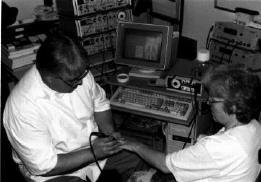

    In Germany in 1952, researcher Reinhold Voll (he was not a doctor) came up with the first device for measuring the electrical resistance of acupuncture points. His system involved over 700 readings on the body, a process that was demanding for both patient and doctor. A simplified procedure has now generally been adopted and is known eponymously as “electro-acupuncture according to Voll” or EAV for short.

    Many electro-acupuncture techniques have been developed since. One of these is the Vega machine, developed by Schimmel and now increasingly in use world-wide. Research into so-called bio-energetic regulatory systems (BER for short) continues apace and BER is rapidly developing into one of the most exciting advances in medical skills.

    The basic Voll machine (known in the US as the Dermatron) is a wheatstone bridge, meaning it checks comparative resistances. The patient holds one electrode in his or her hand while the practitioner uses the other electrode as a probe to touch one of several convenient acupuncture points, usually on the foot. The electrical response results in a read (a swing of the needle, signal if desired). The circuit includes a metallic honeycomb into which phials of different solutions are placed for testing.

    The machine is first calibrated by putting poison, such as a phial of paraquat, into the honeycomb. This produces a ‘disorder read’ (a drop in register); the pathogenic potential of any test substance that gives the same read as paraquat should then be obvious.

    The Voll method is said to be useful in detecting many conditions including stressed organs, early cancer, imbalances  and even too much electro-magnetic radiation from living close to high-tension electric cables. Cross-filtering of test phials may enable the ‘stressed’ organ to be identified and a nidus of infection early tumour, etc. – shown as the cause. The machine’s therapeutic potential lies in the fact that a medicine can be tested to see if it eliminates the disorder read before being administered to the patient, inferring it ought to be effective. This development is called remedy testing. The possibilities are fascinating and I described the whole development in great detail in my book Virtual Medicine.

    From the point of view of this text, the important capability of the Voll method is that it can be used for allergy testing. Obviously, if milk, pork, egg and tomato give the same reading as paraquat, the patient should not eat them!

    Such testing can be swift and effective and consequently cheaper than more formal techniques. This means testing is made more accessible to those of limited financial means. Accuracy may not be as high as with some methods, but it is easy to re-check and missed allergens may turn up on subsequent testing. It is even possible to use a Voll machine to evolve ‘neutralizing drops’, as with Miller’s method above. The correct neutralizing dose will be the one that eliminates the disorder read.

    The main drawback is that the machine can prove difficult to use; some people have the ability, others haven’t. Users of the machine emphasize that practice will eventually enable the majority of would-be practitioners to master it. Here we enter the world of mysterious ‘energies’ and even accomplished practitioners find they cannot perform when tired or stressed.

    Applied Kinesiology

    This method of testing for allergies usually raises a few medical eyebrows. It has its origins partly in chiropractic and partly in acupuncture and was first described and developed by George Goodheart in the USA. As its name suggests it is primarily concerned with the dynamics of posture and movement . Although it has no proven scientific basis it does seen to be founded on a certain body wisdom. A simpler version for the layman, called Touch for Health, was developed by California practitioner John F. Thie.

    Allergy testing is only a small aspect of this discipline. Applied kinesiology is based on the discovery that if the body is subjected to adverse influences, certain muscles go weak. This can be demonstrated with a high degree of consistency, even if performed double blind – that is with neither the practitioner nor the patient being aware of what is being tested. No-one pretends to know the physiological basis of this effect, simply that it can be shown to exist.

    The explanation lies in the field of energy medicine and I have dealt with it at some length in an earlier book (Virtual Medicine). A partial explanation is also found later in this section, under electro-acupuncture according to Voll (EAV).

    Technique

    The kinesiology practitioner gauges the strength of a group of muscles (techniques exist to improve the tone of weak muscles and generally ‘balance’ the body’s dynamic status before starting). Then, by putting a sample of food under the tongue and retesting, he or she is able to tell whether body. If the muscles weaken significantly, the food is deemed to be an allergen. Actually, those who practice this method say it is only necessary for the patient to hold a bottle or a sample of the substance being tested – the muscles will still go weak, which means non-food substances can be tested also.

    AK, as it is expediently known, probably isn’t as accurate as the more ‘scientific’ methods, but that doesn’t mean it isn’t successful most of the time. Remember it isn’t necessary to identify absolutely every allergy to make someone well. Even if it was only 60 to 70 per cent accurate (and it is probably much better than that when carried out by a skilled practitioner) it is still the most cost-effective testing method of all.

    My main criticism, having dealt with innumerable patients who have been first to a kinesiologist and had a failed or only partial result, is that the majority of AK practitioners are naïve in being unaware that their own body reacts too. So many of these people diagnose “wheat allergy” or “Candida” on virtually everyone who enters their office and never question why. Like all “dowsing” techniques, it’s a case of find what you want to find, unless you take vigorous steps to try and prevent this auto-diagnosis.

    Nogier’s Auriculo-Cardiac-Reflex Method (ACR)

    Even stranger than applied kinesiology is the auriculo-cardiac-reflex method, developed by French neurosurgeon Paul Nogier and taught widely by Dr Julian Kenyon of the Centre for the Study of Complementary Medicine in Southampton, UK.

    It is based on the fact that stimulation of the sympathetic nervous system causes the rate of maximum pulse amplitude to shift along the artery. Note: this has nothing to do with pulse rate, which does not necessarily alter.

    The test is calibrated as follows: the practitioner rests his or her thumb over the radial artery at the wrist so that the impulse is just out of reach beyond the tip of his or her thumb. A bright light is then shone onto a sympathetically enervated portion of skin, either the earlobe or the back of the hand. This causes the point of maximum amplitude of the pulse to move till it comes directly under the practitioner’s thumb (I found the graphic I had drawn for me but not the original!)
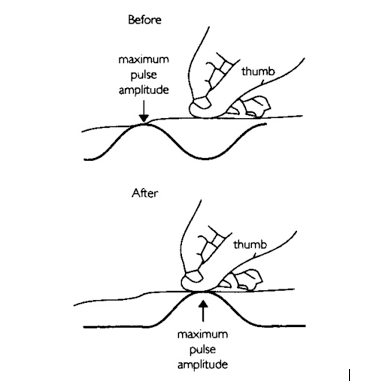
    Done properly, it is like feeling nothing until the light shines, at which point the pulse suddenly starts to bump under the counting thumb. This response to light is called a positive vascular autonomic signal (VAS).

    Testing foods and other allergens is then simply a matter of holding a filter containing each substance over the skin of the forearm. A positive auriculo-cardiac reflex lasting a dozen or more pulse-beats is a sign of an allergy. If it lasts 20 or more beats, that is a severe allergy.

    With set of filters covering common foods and other allergens, it is possible to test quickly a wide range of substances. Once again, the patient must simply avoid the food but, since only the most pronounced allergens show up, it doesn’t usually lead to a long list of banned substances.

    As with the applied kinesiology method, the ACR technique is a fast and cost-effective means of allergy testing, sacrificing high accuracy for expediency but a very useful method, nonetheless, particularly with children.

    Phenolic Testing

    The EAV technique led to an interesting new development: the subject of phenols in foods. This is a true allergic reaction; thus intradermal testing with chlorogenic acid, a phenol found in green coffee, castor bean and orange, gives a wheal and flare reaction in sensitized individuals that is characteristic Type I hypersensitivity.

    There are many such compounds found in food, based on the phenol (carbolic acid) molecule.

    Derivation of phenolic compounds

    The table below lists several common foods and the phenols contained therein.

    Caffeine is an example and is, of course, a poison. In fact most phenolic substances are toxic. How are we able to tolerate them? The answer is, evidently, some people don’t!

    Phenolic compounds are the source of color and flavor in foods. Their toxicity may protect the natural plants against micro-organisms. They also help in the dispersal and germination of seeds and attract flower pollinators because of their scent.

    Some individual phenolic compounds have been correlated with specific disorders. Tyramine and nicotine, for example, are implicated in migraine and headaches. A little experience with phenol ‘families’ leads to new diagnostic skills in allergy. For example, a patient sensitive to cheese, beef, banana and potato might really be sensitive to nicotine.

    Individual phenols can be tested and neutralized using Miller’s method (sublingual only, we don’t inject phenols!). Obviously it makes more sense to neutralize the phenol than a whole series of foods, if that is the real problem. Avoidance is another option, where range of related foods is not extensive.

    Note: Many substances are now included in phenolic testing that are not really phenol-based, but the term ‘phenolic’ persists as an overall generic name for the test procedure.

    History and background

    In 1979, Dr. Robert Gardner, Ph. D., professor of Animal Science at Brigham Young University, began to speculate that his own allergies might be caused by a sensitivity to some aromatic compounds found naturally in all plant foods and pollens. He acquired some of these pure compounds, made serial dilutions and started sublingual tests monitoring changes in his own pulse rate.

    He experienced reactions to various extracts and neutralizing doses were found for each compound. Gardner found that neutralizing doses of these compounds would kill his allergic reactions to specific foods. After several months he had succeeded in neutralizing many of his own dietary allergies and he was able to eat most foods without reactions. He experienced a major improvement in his health.

    Foods may contain many different phenols, for instance cow’s milk contains 13, tomato 14, cheese and soya 9. Some phenolics are very common: rutin and quercetin are found in almost 100 everyday foods. If you’re allergic to cinnamic acid, a common cause of eczema and itching skin, there will 40 common foods that you will react to. You can see that if you were allergic to 2 or 3 phenolics, you could be allergic to dozens of foods!

    Table below shows the phenolic content of some common food substances.
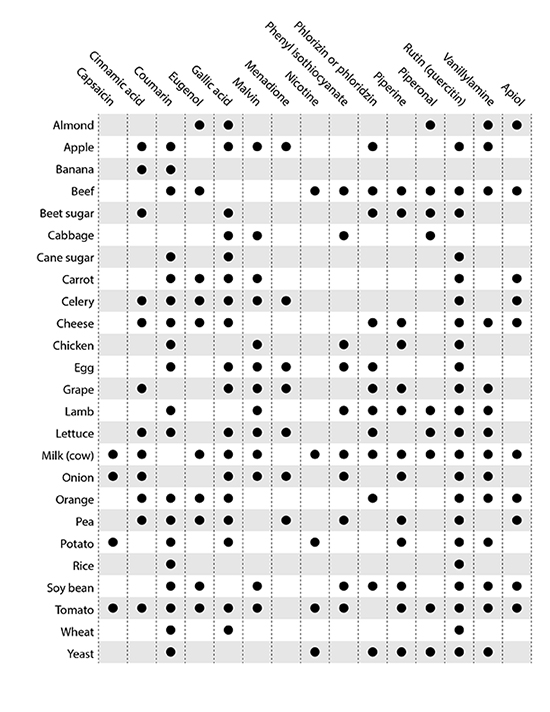
    Insert Image

    Method

    Those who use the phenolic approach rely diagnostically on an EAV set-up. It is quick, non-invasive and consequently cheap for the individual. It is possible to test over 20 items in a matter of minutes.

    The standard 1:5 dilutions of test reagent are used, exactly as for Miller’s method. Neutralizing dilutions tend to run high, up to and exceeding the fortieth dilution (which is virtually unheard of in intradermal testing). In fact it is now advocated that 1:5 series is used only up to about the tenth dilution and a 1:10 from there on, to speed up matters. Children are mostly found to neutralize on lower dilutions, usually between one and twenty.

    Patients return on a monthly basis and receive a 10 cc dropper bottle containing their neutralizing doses and are instructed to take two drops sublingually, three times a day after meals, Upon return the patient is retested and a new neutralizing dilution is administered, which is a almost always lower  than the previous one. The aim is to get down to a ‘No. 1’ dilution (highest concentration), meaning the patient has become tolerant to that particular phenolic.

    The patient is then instructed to take one dose three times a week in order to prevent a recurrence of the original symptoms.

  • Some Of It Is In The Mind!

    It’s all about the details. Pick your thumbnail image, add closed captions, update settings, and track your video performance analytics in the video library. Manage video settings. Learn more about the video library.

    Sorry for the sound of cow bells starting around 15 minutes. Remember, this was recorded in a chalet up in the mountains of Switzerland!

    So Is It “All In The Mind”?

    In 1976 Richard Mackarness launched a revolutionary book NOT ALL IN THE MIND which changed many lives; it also led to my international career in the allergy field, or clinical ecology as we called it then. It became a best-seller, showing clearly the response of the public to the title (the book was known differently as EATING DANGEROUSLY in the USA).

    Patients were simply fed up of being let down by the medical profession, which had failed to help them, and then told to go away, that the problem was “all in your mind”. The real reason, of course, was that the doctors were looking in the wrong place. They didn’t even test the possibility of food and other everyday allergies. Consequently they often declared there was “nothing wrong” and sent the patient home sad or angry and still sick. Some were even sent directly to see a psychiatrist for “treatment”.

    Well, in time we have understood that some of it is in the mind. Classic experiments by Stephen Black, a doctor-hypnotist, showed that a patient could react to an allergy or not, according to what their hypnotist told them. A skin test would be positive and then turn to negative in a matter of minutes and vice versa. He even moulded a patient’s beliefs so that he or she was allergic to skin tests in one arm and not the other at the same moment. Is this a true allergy or not? Which arm was “correct” do you suppose? And what happens if a patient turns up for testing at the clinic in a state of mind that influences the testing in this way?

    These are tricky questions for the wise old clinician.

    Eliminating the human aspect of mind altogether, guinea pigs exposed to severe allergens while music was being played, later suffered anaphylaxis and died when the same music was replayed to them. Yet no allergen was present to cause their demise; only the animals’ expectation from earlier programming (guinea pigs are chosen because they have an immune response much like ours).

    Once alerted to this psychological conditioning, it is possible to see many examples of patients reacting to substances solely because they expect to. I myself have injected blanks into patients, as part of a sequence, and noted the symptomatic response, even without allergen present. The patient thought there was an allergen present and went into their expected routine.

    In other words, we are talking conditioning, in the Pavlovian style, adding extra menace to the complex difficulties of allergy and intolerance.

    Now this is not to return to the old abusive “it’s in the mind” theory. But I am saying all this to say that there is potential for positive good in understanding the mind’s role. It means we can harness the power of the mind to alter or eliminate the body’s biological reaction to an allergen. For many that would be a boon; for some, it could be life-saving, as when an individual is facing the danger of an anaphylactic reaction.

    To find out more, I suggest you look at a copy of a video workshop entitled Eliminating allergic responses: Retraining your immune system by Tim Hallbom and Suzi Smith (55 minutes, $40). It is available from NLP Comprehensive, 12567 W. Cedar Drive, Suite 102, Lakewood, CO 80228. Tel: 001 (303) 987-2224 Fx: 303-987-2228 or find it on their website at: http://www.nlpco.com/products/therapy/therapy-090.html

    The embrace-all subject rejoices under the banner of “psycho-neuro-immunology”. It is now well known that stress depletes the immune system response; for example, after bereavement there are significant quantitative falls in the levels of T cells and natural killer (NK) cells, which vitally protect us from infections and cancer. I constantly point out to my patients that most “colds” follow a significant loss; some people believe me and some don’t! The exact physiological mechanisms are not so important as understanding of the relationship of thoughts, moods and behaviours to the immune response.

    Even more importantly, we need to learn much more about how to use this interaction to benefit the immune system and so improve, among other things, allergy and intolerance. Thinking positively is a good start; avoiding negative emotions and stressful encounters is another. You don’t have to be a recluse; just quit getting into endless disputes and rows. Learn to live with grace, love and a tolerant gentleness towards others.

    You’ll love the feeling anyway, as well as improve your health and longevity.

    Are You Under Real Stress?

    Of course stress leads to an illness. That has never been in doubt. The famous Holmes and Rahe study of 1978 attempted to quantify the degree to which stress led to a breakdown of health resources.

    Ask yourself the following kinds of questions, thoughtfully and honestly (can’t remember where I found them):

    1. Are you living in a relationship with someone to whom you can’t explain your feelings or desires? (doesn’t understand, won’t listen etc.)?
    2. Are there people constantly telling you you’re stupid, no good etc? Have you had this for long periods of your life? (parents, at school, a relationship, at work, marriage etc.)?
    3. Have you just come through (within the last 3- 5 years) a major life catastrophe: personal bankruptcy, divorce, refugee status, investigated or charged by the police, or similar?
    4. Are you facing an imminent similar catastrophe, even though it hasn’t yet occurred?
    5. Are you openly depressed or do you readily admit to yourself you are unhappy with life the way it is, that it’s not what you wanted for yourself?
    6. Do you drink alcohol or take abuse substances (almost) every day?
    7. Is there constant quarreling or anger in your household: shouting, calling names, smashing up in rages; or do you often hate someone, such as the kids, your spouse, the boss?
    8. Do you live in fear (spouse, neighbors, threats at work, dread of being found out for some crime, voices in your head or frightening visions)?
    9. You can’t sleep soundly for 7- 8 hours per night (dreams, ghosts, anxieties, doubts etc. keeping you awake)?
    10. Do you have obsessions or compulsions you can’t drive from your mind, or ideas you have to constantly repress (such as paedophilia, wanting to kill someone, etc.)?
    11. Were your parents tyrannical, abusive, neglectful, alcoholic, drug addicted or suffering from a major psychiatric disturbance (either parent)?
    12. Have you had a bad drug experience that left your mind disturbed, fearful, confused or out of control in any way?
    13. Is your career as you would wish – doing the right job with satisfaction and enough remuneration to pay your basic bills (or do you hate your job, hate your boss and hate getting out of bed in the morning)?

    Too many YESes will certainly amount to serious stress in your life.

    In more recent years Dr Ryke Geerd Hamer has launched his “New Medicine”, which is founded on five fundamental empirical conditions. The first of these is that severe illness (including cancer) follows sudden overwhelming shock. He’s got 30,000 cases to prove the cancer link. But Hamer also points out that any disease process is not some unruly piratical process going on in our bodies but an intelligent response by nature to some stressor factors, whether they be external or internal.

    All intelligent doctors have believed this since Elizabethan physician Thomas Sydenham first pointed it out. Sydenham is now, ironically, revered by conventional doctors, yet very few of them know that he first propounded the fundamental holistic principle of Nature (he’s famous for the eponymous name of a kind of chorea).

    The fact is that dealing with stress can be a valuable treatment for allergies. Sometimes the problem goes away altogether, it’s that basic!

    Not All Stress Is Mental

    Remember, when I say this, that not all stress is mental. Any chronic illness, such as infections and malnutrition, is stressful; exhaustion and excessive physical exertion are similarly so; lack of vitamins, too little sleep, cold, heat and other extremes are all forms of stress. These factors can all make allergies worse by lowering the body’s resistance. Allergies themselves are stressful, which is rather a vicious circle in some cases and explains why sometimes a patient gets ill due, say, to a virus condition and then never really gets over it.  The allergies themselves maintain the stress and recovery is not possible until the allergies are detected and defused.

    Hans Selye’s theory about stress (see MECHANISMS OF ALLERGY) is a good one, in that it explains the observed facts and enables us to make certain predictions. For example, if stress goes on too long there will come a time when no adverse effects can be observed (stage 2), a state we call adapatation. Yet this will inevitably lead to a serious deterioration, unless the stress is removed (stage 3), the actual time interval varying according to the individual and the type of stress.

    The bottom line of this is that allergics must avoid stress.  If that sounds too perfect then let us say unnecessary ‘stress’ perhaps, even more exactly, that allergics should learn to contend with stress. It may not be possible to avoid a stress experience but if the patient can make an allowance for it, by reducing stress in some other area, the effects may not be so disastrous. Thus I often find myself, faced with a patient whose illness has returned during times of crisis, suggesting revert to a much simpler and safer diet for a period. The rationale is that wrong foods themselves may be stressful and those which are tolerated barely under optimum conditions are best avoided until the danger has passed. Going to bed to rest more may the same effect (not to be encouraged too often). Other ways of reducing stress in a compensatory way may suggest themselves in individual cases. This is what I mean by learning to cope with stress, as opposed to merely avoiding it.

    Get Out Of The Fast Lane

    A lot of people ask for trouble by pushing themselves too far a hectic society we live in today and often relentless pressure assails the individual who wants to do a little more than just get by. Success comes at a price and often the price is too high.  It isn’t really worth striving for material goals if by the time you achieve what you want bad health prevents you from enjoying your triumph. The neurotic rich are a study in hang-ups and pathology. It is worthwhile stopping to consider whether you really want to join them!

    Remember, the body begins to recover as soon as you remove stress. It may take a long time but as soon as you control adverse factors, things will begin to look up. The fact is it’s too late to change. There are many worthwhile goals in life apart from a bigger mortgage or a prestigious car. It may better to set yourself some spiritual goals; perhaps more time with the kids, that special holiday you’ve always promised yourself. Remember, the harder it is for you to contemplate this thing, the more in the grip of the race you are. People who take time off at the drop of a hat and go for a few days on a tour in Scotland, The Algarve, Bali, or Panama are not really under much pressure. It is those who can’t get away who are the ones who must do so, for their own good!

    Don’t forget to also visit the Neurolinguistic Programming video page here: Neurolinguistic programming demo

  • Testing – part 1 Blood, Skin, Labs

    It’s all about the details. Pick your thumbnail image, add closed captions, update settings, and track your video performance analytics in the video library. Manage video settings. Learn more about the video library.

    Notes On The Testing Methods Discussed

    Prick or scratch tests and hyposensitization

    The mainstay of conventional allergy test has not advanced significantly since 1911, when the prick and scratch test method was first developed. For this method a small drop of the substance being tested is dropped onto the skin, which is then scratched or pricked with a needle at that spot. The amount of flare and wheal compared to that caused by a control (inert) solution gives an indication of how allergenic the substance is (Noon L., Prophylactic Innoculation against Hay Fever, Lancet 1, London, 1911, p. 1572).

    It is a very inaccurate method, with many false negatives, and subjects seldom react to food at all in this way, though a demonstrable allergy may be present on challenge testing. An important migraine study at the Great Ormond Street Hospital for Sick Children in 1983 showed that none of the cases would have recovered by following an exclusion diet based on the results of the prick testing included in the trial, though 93 per cent improved on a suitable diet, showing that food allergy was the cause (Egger J. et al. Is Migraine Food Allergy? Lancet, London, 15 Oct 1983, pp.865-8).

    False negatives: are disastrous because you are misled into believing the substance is safe

    False positives: are merely inconvenient, you avoid something unnecessarily, when it is quite safe

    One final failure, which is not talked about: the substance with the largest reaction may NOT be the one which is causing you the most trouble, as I have found out many times with the help of Miller’s Method.

    The hyposensitization method aims to find out which substances the patient is allergic to, by giving a whole batch of prick testing, and then to administer injections of a mixture of these, increasing gradually in strength, until quite large amounts are being tolerated. The body is often then found to be able to cope with normal ambient concentrations.

    There are two major drawbacks to this hyposensitization treatment:

    • it rarely works for food and
    • it can be extremely dangerous. Patients sometimes react severely and deaths due to anaphylaxis occured regularly until by common consent its use was abandoned in 1986, except in special circumstances and where full cardio-pulmonary resuscitation equipment is at hand.

    The only suitable indications for the use of this method are in cases of perennial rhinitis and asthma due to dust and dust mite allergy, seasonal rhinitis due to pollens and the danger of anaphylaxis due to insect stings. Even so, very brittle (vulnerable) cases, especially children, are better left un-desensitized, since the dangers of the method are very real.

    Patch testing

    Another fairly primitive technique is patch testing. Small quantities of different suspected substances are placed under individual cups which are taped to the skin for a number of hours. A reddening of the skin under the patch denotes a sensitivity to that substance. A control is used, since some people react to the pads or tape, etc.

    A positive reaction is probably fairy dependable, but it rarely happens. Unfortunately, even substances known to have a marked effect often don’t affect the skin. In other words, negative reactions do not exclude significant allergens.

    This method works best for identifying causes of contact dermatitis, such as nickel, soap powders or industrial chemicals.

    Immunological tests

    All other conventional allergy tests are based on immunological reactions of the IgE antibody type. Naturally, classic antigen-antibody reactions are the only results to be expected, which precludes a large number of other allergic and intolerant reactions.

    Broadly speaking, then these tests are fine if they give a positive result; which is to say, if an allergy to wheat or egg is found, it exists. Avoiding that food will help with the overall body load. But negatives are meaningless (these occur over 95 per cent of the time). Also, a positive reaction on an immunological test only means antibodies are present, it does not mean the allergy is the one causing symptoms. Experts often overlook this elementary point.

    The RAST (radio-allergo sorbent) Test

    This is the basic immunological test using labeled molecules for quantifying results.

    Specific antigen (in this case the allergy being tested) is incubated in contact with a plastic plate or tube until it becomes bound by adsorption (adhesion).

    The plate is washed and the patient’s serum, with suspected IgE antibody to that allergy, is added. This naturally locks on to the antigen. Unused sample fluid is washed away, leaving “captured” IgE.

    How much IgE antibody has been ‘captured’ is measured by adding a second binding antigen, in this case anti-IgE, which locks onto the IgE in the antigen-antibody complex. This creates an antigen-IgE-antigen “sandwich”.

    After all un-fixed substances have been washed away, the amount of IgE antibody that remains sandwiched can be measured by a number of tricks. In the basic test, the anti-IgE is labeled with radio active iodine125. After unused labeled molecules have been washed away, the amount that remains behind can be measured using a gamma counter (Geiger counter). Hence: radio-allergo sorbent test.

    Another variation called the ELISA test (enzyme-labelled immuno sorbent assay) is to label the anti-IgE with a colour-generating chemical (enzyme). After washing, adding a second enzyme releases the dye. Sensitive spectrometry measures how much colour is now present, hence giving an indication of how much IgE is present.

    This approach gives an exquisitely sensitive measurement of how much antibody was present in the serum being tested, using only tiny amounts of test solutions. If the RAST or ELISA test are positive, then antibody is present and a degree of allergy exists to that substance. Very large amounts of IgE mean a bad allergy and a potentially dangerous reaction.

    Provocation Tests

    Conventional allergists share with clinical ecologists a respect for using the patient as his or her own test bed. To administer a substance to the patient to see what happens is called a provocation test. Food and chemical challenge tests are described elsewhere in this section, since they are not used by conventional allergists.

    Ophthalmic Testing: Small quantities of test reagent can be placed into the conjunctival sac of the eye. Reactions include visible reddening, lachrymation (tears) and (sometimes) sneezing. There is a limit to the number of substances that can be tested at any one time (i.e., very few) and so this has limited application. It is particularly suitable for seasonal reactions (pollens) being tested out of season.

    Nasal Provocation Challenge: Potential allergens can be introduced into the nasal passages, either as liquid or powder particles, and the results monitored. The patient is then observed for an arbitrary 5 to 30 minutes (depending on the standard procedure). Reactions can include sneezing, catarrh, a blocked nose and, naturally a clinical ecologist would ask, cerebral and other manifestations as well. One or two initial sneezes are discounted as being probably just a normal response to the irritating effect of the liquid/powder in the nasal passages.

    Alternate nostrils are used and up to 20 items can be tested in one session. If severe symptoms develop, a nasal ‘washout’ using saline (salt water) will normally clear them. It not, testing may have to be discontinued for the day.

    Bronchial challenge test: The patient is asked to inhale the test substance into their lungs. It is very dangerous indeed, people have died. No responsible physician should ever administer such a test, yet conventional allergists sometimes do. If you are offered it, refuse outright. Two deaths I know of were attributable to research testing, using this method; the unfortunate patients believed they were helping science.

    NON-CONVENTIONAL ALLERGY TESTING METHODS

    These can generally be classified as the good, the bad and the downright awful. Remember that the value in the test method may lie as much in the treatment which goes with it as the actual technique itself. For that reason I introduce first an entirely scientifically credible testing option which gives good accuracy and leads to a treatment method that has spelled freedom and health for countless patients. I myself have taken over 10,000 people through it over the decades since I was shown it. Conventional allergists fight it tooth and nail, entirely through vested interest. The controversy rages on. You are provided with some references to clinical trials, which you may pursue for yourself.

    Miller’s Method (provocation-neutralization)

    Also known as serial end-point skin titration, this is the method that enabled me to find some remarkable and obscure allergies, which would otherwise probably have remained hidden.

    It was first developed by Carleton Lee of Missouri in the late 1950s. Lee began a series of investigations by injecting his allergy patients with antigens at different concentrations. He noticed something interesting: obviously sometimes he provoked a symptom but sometimes, given a particular dilution, a patient’s symptoms would disappear in just a few minutes, as if by magic. This might happen, eben if the patient had arrived at the office with symptoms! It was one of those lucky situations where the right person is in place, at the right time, to draw useful scientific conclusions. Lee realized immediately that diluting an antigen could make it effective at neutralizing the symptom associated with the allergy.

    In fact it emerged that only one specific dilution had this serendipitous effect, which Lee christened the “neutralizing dose”; unfortunately, it was different for each patient (and each allergen) and had to be tested individually. But it was a major advance and offered much symptomatic relief for suffering patients. Herbert Rinkel and others went on to improve Lee’s method and promote its more widespread use, and the first definitive book explaining the technique in detail was written by Joseph B. Miller (Food Allergy: Provocative Testing and Injection Therapy, Charles C. Thomas, Springfield, Illinois, 1972); hence known as Miller’s method.

    Lee’s widow has (quite rightly) campaigned to have it recognized as the Lee-Miller method. I should also say at this point that Joe Miller is a nice unassuming man and would not dream of purloining a colleague’s eponymous title but that’s the way of the world.

    The technique

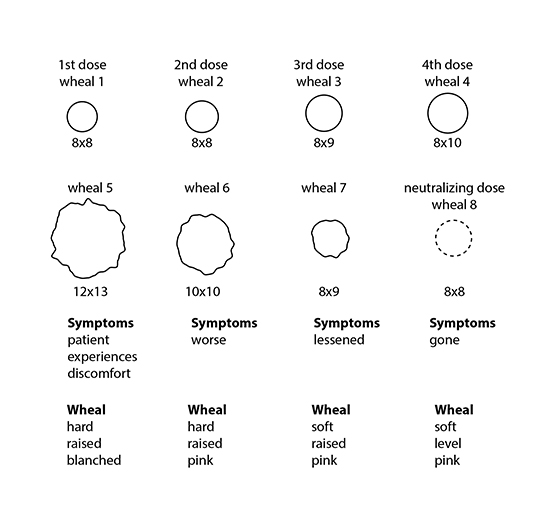
    After testing the control and being assured of the zero baseline reaction, a reagent (food, dust or chemical) is injected superficially into the skin (intracutaneously), making a deliberate wheal. If this grows compared to the control over, say, 10 minutes, this suggests an allergy. The bigger the wheal, the more probable the culprit up to a point. Thus far it looks like scratch or prick testing; but because of the safety factor implicit in the explanation below, we use quite concentrated reagents, which cause foods to show up often, unlike with the scratch or prick method.

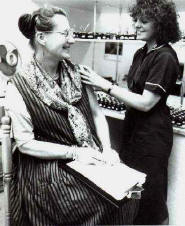
    Here’s a shot of my nurse Sue administering the testing in a friendly/informal lab setting:

    Sometimes a symptom is produced (provocation) and this is much more conclusive. Remember these substances are tested one at a time, so there is usually no doubt which caused the symptom.

    If a reaction occurs (wheal or symptom), the patient is then given a series of weaker and weaker injections of the same substance at 10-minute intervals until the wheal ceases to grow and the symptom, if there is one, disappears completely.

    This ‘switch-off’ dilution is called the neutralizing dose; it works as a kind of antidote. The procedure is illustrated in the figure below.

    Safety note: Because of the ultimate neutralization of the allergic reaction, this method is very safe. Even very unpleasant symptoms are brought rapidly under control by injecting a more dilute dose of the allergen (nearer the end-point). Final adjustment of the correct end-point means that symptoms have vanished altogether. In over half a million test doses I only ever once encountered anaphylaxis, which was blocked by immediate administration of epinephrine (adrenalin). At the time of writing no death has occurred due to Miller’s method, despite its use by thousands of doctors world wide. This is in sharp contrast to the hypo-sensitization method, which caused multiple deaths annually until discontinued.

    Nevertheless it is sensible to avoid injecting any substance into a patient who has already had an anaphylactic reaction.

    The size of the wheal at start is unimportant

    After testing a number of substances, a patient can then be given a cocktail of the resulting neutralizing doses. These are administered by self-injection every second day (a simple procedure, easily learned). Some clinics allow patients to take the neutralizing complex sublingually. This has the appeal of being easier and without any discomfort but gives less efficient cover. Sublingual administrations are needed every few hours (just prior to each main meal), which can be a nuisance. The beauty of neutralization is that patients can (usually) go ahead and eat the allergy food. Obviously common sense must play a part and if the reaction is severe, reduced intake may be necessary. But it is better than a life of strict avoidance. Happy patients have found themselves able to eat and drink troublesome items and so rejoin social life on virtually equal terms with the rest of us.

    Coordination testing

    The method’s accuracy can be increased by asking the patient to undertake simple tasks, such as a handwriting demonstration and noting how these change under testing. At the neutralization point the patient’s performance should return to normal. More objective determinations can include measuring the patient’s pulse rate and blood-pressure.

    One important advantage to this method is that the symptom provoked gives the patient a vivid subjective demonstration of each allergen, which helps to fix it in his or her mind. This is far more meaningful than the abstract results of a blood test or some other laboratory report. But remember, not all allergens provoke symptoms.

    Another advantage is that a patient with multiple allergies need not be restricted to a very meager diet: allergenic foods can be eaten in moderation, under the umbrella of the ‘drops’. Only foods that cause a severe reaction are banned – and the patient may even become desensitized to these by taking the drops and avoiding the food for several months.

    Problems

    When it works, the method works very well. A number of difficulties may occur, however. About 10 per cent of cases are plagued with shifting end-points. Repeat testing becomes necessary and this is troublesome and may be expensive. These shifts can occur very rapidly. So that by the time the patient is supplied with his or her prescription, it is ineffective. In these cases, even retesting won’t help. However, this only applies to less than 5 per cent of those tested.

    Unfortunately, the people who need this kind of treatment most, the very sick, ‘unstable’ patients, are the ones most likely to be troubled by this shifting end-point phenomenon.

    Even if the antidotes are not effective, however, the method is still good for diagnosis. It can pinpoint rapidly the worst allergens for a patient. This will help reduce his or her body load. The method is also very safe. Reactions are common but rarely severe, and in any event can be relieved rapidly by the corresponding neutralizing dose. Nevertheless, it would seem prudent to avoid injecting anything into an individual who has experienced a dangerous anaphylactic reaction.

    An outstanding feature of this neutralizing technique is that it is usually effective against environmental chemical triggers – no other method is. This makes it superior in my view to enzyme potentiated desensitization.

    Hormones

    An important special application of Miller’s method is in neutralizing hormones. Women tested with oestrogens and progesterone often experience reactions, particularly to progesterone in cases where the woman deteriorates badly health-wise at around her period time. We can hypothesize that these women are allergic to their own hormones (see hormones and allergy).

    In fact there are two phenomena we encounter. If the reaction is straightforward and neutralizes easily, this probably represents a true ‘allergic’ reaction by the woman to her own hormones. But sometimes it can be very difficult or impossible to neutralize a symptom once provoked. We take this to be evidence that the real problem is a hormone imbalance – hormone replacement therapy (HRT) can be considered as a possibility in management.

    Sublingual provocation and neutralization

    A modification of the Miller-Lee technique is to test substances under the tongue (sublingually). A food or other concentrate is placed under the tongue and the reactions noted. If the patient experiences a symptom, this is neutralized, as before, by serial dilutions. The dilution that switches off the symptom completely is taken as the end-point (Dickey, LD Sublingual Use of Allergenic Extracts (monograph) ed. H C King, Elsevier, New York, 1981).

    There is no essential difference between this approach and using an injection, although naturally there are fewer parameters by which to judge reactions or the lack of them. Instead of being able to view a wheal, its size and characteristic, the clinician has only the patient’s subjective symptoms to rely upon, plus what he or she can observe objectively. Yet with practice it is possible to become quite adept at spotting subtle shifts in the patient’s mood or attitude, skin colour, etc. The neutralizing dose would be that which leads the patient to declare his or her symptoms ‘switched off’ and the clinician to note that whatever manifestations arose have disappeared again.

    Obviously, subtle reactions may be missed. Well-masked allergens may not react at all. But the technique is especially suitable for children, many of whom don’t like injections and would not willingly sit for several hours tolerating intracutaneous needles every 10 minutes.

    Dermal application testing

    A further modification of this technique, developed by Drs Jean Munro and Ray Choy in London, is to test substances directly on the skin. This method arose from an observation that probably all clinical ecologists have made form time to time: that an extremely sensitive individual sometimes feels unwell just being in the presence of allergens. Such patients may have to be relocated away from the storage and display areas there test solutions are kept in order that they can be tested.

    Munro and Choy were finding that some patients were reacting quite severely to the usual technique and decided to test these patients by simply having them hold a phial of the solution. Even this was too much for some; and so dermal application was resorted to. It was found quite workable.

    By placing a dilution of the extract on the skin of, say, the back of the hand, biological and subjective reactions could be provoked and then neutralized by further dermal applications. Sometimes these dilutions may reach ‘homoeopathic’ levels (i.e. they are very dilute) but still seem to work.

    The important safety measure is that if a strong reaction develops, the test solution can be wiped off swiftly.

    Controversy

    No technique of clinical ecology has been more heavily criticized than Miller’s method. Nevertheless, most of us who use it do so because we are aware of its capabilities and accept its scientific validity. More and more papers are being published that show its effectiveness. Yet the controversy won’t go away.

    Over the years a number of studies have been cited to show that Miller’s method is a fake. Almost without exception these have been improperly reported, evidence for key statements has been missing and data has been altered (or withheld) or the protocol so bad that it was obviously designed to invite failure.

    In 1973 the Food Allergy Committee of the American College of Allergists, using sublingual provocation testing (see below), carried out a study that showed that the neutralization basis of Miller’s method was quite effective. Did they publish their findings? No, they repeated the whole test again in 1974 and this time found that the statistics were not as good. The second study was therefore termed ‘The Final Report’ while the first positive study was simply cast aside.

    The ‘Jewett trial’ carried our in 1981-83 was appallingly defective. The results remained unpublished for seven years, so clinical ecologists world-wide were deeply shocked when it was suddenly published in August 1990 in the New England Journal of Medicine. This, the world’s second most prestigious medical journal, even went to the extraordinary length of issuing a press release announcing that at last the clinical ecologists were going to be sunk. I won’t say such spite is without precedent in medicine, but it certainly has no place in a scientific periodical.

    To my mind, Miller’s method is an outstanding contribution to medicine. Like all medical techniques, it requires skill if it is to be performed correctly.

    Modern SLIT (sub-lingual immunization therapy)

    I mentioned that sub-lingual allergy neutralization therapy has come of age. It’s gone mainstream and appears everywhere. Yet I was called a quack (seriously) for using it in the early 1980s.

    Sandra Y. Lin, MD, an associate professor of otolaryngology–head and neck surgery at Johns Hopkins University School of Medicine in Baltimore, Maryland, and colleagues did a systematic review of 63 studies with 5131 participants found moderate support for sublingual immunotherapy for the treatment of allergic rhinitis and asthma.

    The findings were published their findings March 27, 2012, in JAMA.

    They were not looking at food allergies, per se. They were more interested in diseases, like asthma and rhinitis. Improvements found were 40% or even more. That’s without eliminating any suspect foods, so not a bad result. I would have got closer on 85%, if allowed to enter dietary advice, as well as immunotherapy.

    Still, all in all, a very satisfactory paper and much vindication of the work I and others did, back in the 1970s and 80s.

    Of course the die-hards who make their money from allergy shots were quick to start picking holes.

    Robert Bush, MD, professor emeritus of medicine in the Section of Allergy and Immunology at the University of Wisconsin in Madison, said:

    “This paper updates the previous Cochrane meta-analysis and appears to strengthen the data regarding the efficacy and safety of [sublingual immunotherapy] by adding recent studies.”

    “While the article is generally supportive of the potential use of [sublingual immunotherapy] as being efficacious and relatively safe, it is important to remember that [sublingual immunotherapy] has yet to gain FDA approval for the vaccines. Further research is needed to establish standardized dosing, and FDA approval will be necessary before [sublingual immunotherapy] is considered as a part of clinical practice.”

    The sly innuendo that the FDA hasn’t approved it yet (who cares?) is to try and weaken the competition and he trots out the old chestnut “more research needed”, which is the last refuge of the intellectually dying, as they see the ground crumbling from beneath their feet!

    [REFERENCE” JAMA. 2013;309:1278-1288]

    Support For Miller’s Method Sublingual Therapy

    I remarked in my video that sublingual immunization therapy (SLIT) has received much scientific scrutiny lately and been found very good.

    I’m just publishing this note about yet another paper. It shows how disgracefully bad American science is, with them claiming the technique was first published in 1986. Just not true! It goes back decades before that.

    But they ignore anything outside their own narrow purview.

    Here’s a brief extract; you don’t need all the technical stuff.

    Abstract

    Sublingual immunotherapy (SLIT) for allergic respiratory diseases was first described in 1986 and immediately appeared as a viable alternative to the traditional subcutaneous route. Since then, more than 60 randomized controlled trials have been published, almost all with very favorable results. The average improvement over placebo in symptom score and medication use was always greater than 20%. The results of the clinical trials were pooled in several meta-analyses, which consistently confirmed the efficacy of the treatment. SLIT is characterized by a satisfactory safety profile, its side effects being mainly limited to oral discomfort. Only six anaphylaxes and no fatalities have been so far reported. Due to the good risk: benefit ratio, SLIT is currently being investigated in diseases other than respiratory allergy, such as food allergy and atopic dermatitis.

    [Immunotherapy. 2013;5(3):257-264]

    Introduction

    In 1986 the use of allergen-specific immunotherapy (SIT) administered by the sublingual route (SLIT) was described for the first time. Until then, the only route of administration for SIT remained subcutaneously (SCIT), which was repeatedly demonstrated to be effective in respiratory allergy. Nonetheless, with SCIT, some risk of severe or even fatal adverse events still remains.

    The risks can be partly attributed to technical/human errors and can therefore be avoided; however, a large fraction of the severe adverse events reported remain unpredictable, even if all precautions are taken. Based on this, alternative routes of administration were repeatedly approached. Among them, SLIT appeared as a promising route, despite initial skepticism owing to the low doses used and the poor design of the early studies. During the last 15 years, numerous randomized controlled trials confirmed the clinical efficacy of this route and several surveys supported the good safety profile of SLIT. Nowadays, SLIT is officially accepted in international documents as a viable alternative to SCIT for both adults and children. In addition, thanks to the good safety profile, the use of SLIT has also recently been proposed in non-respiratory allergy, including atopic dermatitis and food allergy.

    [please note I was using it for food allergy as early as 1981! My mentors go back before that even. Carleton Lee discovered the neutralizing method as long ago as the 1950s. It has been proposed that it be called the Lee-Miller Method]

    Despite the abundant literature confirming the efficacy of SLIT, some aspects are still debated, such as the optimal maintenance dose, best administration regimen and duration of the treatment. Finally, the wide variability in standardization methods, usually applied using in-house references, render the published studies difficult to compare.

    Cytotoxic Tests

    This next method sounds closer to the classic antibody blood tests, such as the ELISA. However there are significant differences and it is far from mainstream yet.

    Use of a ‘leucocyto-toxic’ reaction for in vitro screening for food allergy antibodies was first recorded by P. Black in 1956. The test at that time was crude and produced results that are best described as suggestive, rather than conclusive. Today’s method follows 30 years of refining this test.

    Since 1960 the test has been researched steadily by W.T.K. Bryan and M.P. Bryan at Washington University school of Medicine in St Louis, Missouri. The technique is simple but depends for accuracy upon a high standard of laboratory technique.

    White blood cells (leucocytes), separated by centrifuging, are placed on a microscope slide chamber and mixed with about 10 mg of food extract. The sample is then observed at intervals over the next two hours, using a x 60 lens, and the effect of the food extract on the white cells is noted.

    Healthy white cells are mobile and exhibit amoeba-like behaviour. On contact with an allergen, in this case a food sample, the cells lose their mobility and become rounded in shape. Cytoplasmic granules become sluggish and cease to stream. Eventually, damaged cells rupture and die. Hence the name for this procedure which is cyto (cell).. toxic (damaging).

    A typical test might include several dozen foods, food additives and inhalants such as dust, cigarette smoke and even house gas. Theoretically, hundreds of items at a time can be tested. In practice, the number of items is limited by how many technicians are employed and how many slides they can scrutinize before the samples begin to deteriorate.

    Reporting

    It is customary to grade reactions from 0 to 4, depending on severity of damage, observing the following changes:

    0   reduction or loss of amoeboid movement

    0   reduction or loss of amoeboid movement
    1   intracellular stasis (slow-down or stop-page)
    2   rounding and distortion of cell contour
    3   vacuolation (the appearance of tiny vacuoles, or cavities)
    4   cell lysis (bursting open)

    Dr. Damien Downing, who first introduced this method into the UK, claims that it has an 80 per cent accuracy. There are many critics however, even among clinical ecologists, who do not take these claims seriously and who point to many well-conducted trials which show that the method is virtually useless. Cytotoxic testing appeared to suffer a mortal blow to its credibility when, for a stunt, journalists sent blood from the same person on the same day and received two widely different reports on the “patient’s” sensitivities.

    The difficulty with the test, in common with many other methods, is that it rests in the final analysis on human interpretation rather than objective measurement. This isn’t so bad as long as each laboratory is at least consistent with its own standards. But it may, on occasion, lead to patchy quality in results, which can be very misleading for the patient.

    Dr Downing comments on the reproducibility of the test: ‘If the same blood is examined in two separate preparations simultaneously, or in the same preparation by two technicians, or the same blood is examined at 24-hour intervals under controlled conditions, with any single increase in the degrees of freedom, one generally finds that between one in five and one in six of the test results cross the border form one to another of the four possible results. This is presumably a reflection of the technicians’ human limitations. Greater degrees of variability are rare, at around one per cent. That is to say that a technician can manage to, get the result accurate to within one degree of reaction 99 per cent of the time!’

    This sounds almost too good to be true, until you remember that in this case each ‘one degree’ of reaction represents 20 per cent of the whole; that means results could be in error by 39% of effect and yet still appear as only “one degree” apart!

    Modern test systems, such as the ALCAT or Nutron test claim to get round this element of observer error by using mechanized counting.

    Probably the main drawback of the cytotoxic test method is that it needs intelligent and knowledgeable back-up by a competent doctor. Otherwise the patient is left avoiding certain foods indefinitely, with no clear place in mind, struggling to keep up an adequate diet n a selection of things to eat that may be pitifully limited.

    Unfortunately, this after-care is not always readily obtainable and the laboratories themselves often duck the issue.

    Mediator Release Testing (MRT) and The LEAP Program

  • Sub-Lingual Desensitization Drops

    It’s all about the details. Pick your thumbnail image, add closed captions, update settings, and track your video performance analytics in the video library. Manage video settings. Learn more about the video library.

    Sublingual provocation and neutralization

    A modification of the Miller-Lee technique is to test substances under the tongue (sublingually). A food or other concentrate is placed under the tongue and the reactions noted. If the patient experiences a symptom, this is neutralized, as before, by serial dilutions. The dilution that switches off the symptom completely is taken as the end-point (Dickey, LD Sublingual Use of Allergenic Extracts (monograph) ed. H C King, Elsevier, New York, 1981).

    There is no essential difference between this approach and using an injection, although naturally there are fewer parameters by which to judge reactions or the lack of them. Instead of being able to view a wheal, its size and characteristic, the clinician has only the patient’s subjective symptoms to rely upon, plus what he or she can observe objectively. Yet with practice it is possible to become quite adept at spotting subtle shifts in the patient’s mood or attitude, skin colour, etc. The neutralizing dose would be that which leads the patient to declare his or her symptoms ‘switched off’ and the clinician to note that whatever manifestations arose have disappeared again.

    Obviously, subtle reactions may be missed. Well-masked allergens may not react at all. But the technique is especially suitable for children, many of whom don’t like injections and would not willingly sit for several hours tolerating intra-cutaneous needles every 10 minutes.

  • Electro-Magnetic Methods Assessed

    It’s all about the details. Pick your thumbnail image, add closed captions, update settings, and track your video performance analytics in the video library. Manage video settings. Learn more about the video library.

    Here’s the Benveniste video mentioned.

    It’s very old and crude! (like 10 years ago)

  • Neuro-Linguistic Programming

    Neurolinguistic programming (NLP) can sometimes cure allergies

    It can be almost instant, though that’s not a requirement.

    I can do this technique (pretty good!) but since I am not a trained NLP practitioner I have deferred to Tim Hallbom who shows you how it’s done in just a few simple moves.

    It’s deceptive though. It needs to be done right.

    It works for foods, chemicals, in fact all reactions. Please integrate what you see here with what you learn in the “Some Of It Is In The Mind” video.

    How Does NLP Help Allergies?

    The premise of NLP suggests that allergic reactions (an immune response from the body) are directly influenced by the mind and other psychological factors. NLP works by questioning these factors, and teaches the individual on how to have more control over his or her body’s response to allergens.

    Through techniques mentioned earlier, NLP practically retrains the immune system to react less, if at all, to allergens. It aims to treat the allergy by reeducating the immune system to react passively instead of actively in response to allergens (and other foreign substances) via techniques of psychological reframing.

    Allergies can often develop in times of great change such as puberty, marriage, poor health and with even parenthood. These changes can all affect us both externally and internally at a cellular level. With these changes in mind, NLP aims to help the individual identify how and when the allergy developed, and reeducates the body on how it may have acted differently. In training the imagination, NLP teaches the body what it needed to know to deal with the allergen at that crucial time of development, giving it a new point of reference for future encounters with allergens.

  • Enzyme Therapy

    It’s all about the details. Pick your thumbnail image, add closed captions, update settings, and track your video performance analytics in the video library. Manage video settings. Learn more about the video library.

    Dr. Willian H. Philpott has carried out pioneering investigations into the efficacy of pancreatic enzyme supplementation for people with food allergies. The pancreas is one of the prime but least often identified target organs for the allergic/intolerance process. It is also an important endocrine gland for the secretion of the hormone insulin.

    Gastric digestion occurs in an acidic pH (1.8 to 2.0), whereas the small intestine functions in an alkaline medium (pH 8.0 to 9.0). The stomach secretes hydrochloric acid to achieve this acidic pH; the small intestine and pancreas produce bicarbonate to neutralize this and achieve the alkaline effect.

    In addition, the pancreas secretes important digestive enzymes: proteolytic carbozymes (such as trypsin, chymotrypsin and carboxypeptidase) to digest protein, lipase to digest fats and pancreatic amylases to digest starches. These enzyme processes are known to be regulated by tissue hormones called kinins.

    Lack of proper digestion may cause food to retain its antigenic characteristics – thus it will still have a wheat, milk, banana, etc. character and be capable of generating an antibody response when it reaches the bloodstream. This will aggravate or precipitate food allergy and intolerance in susceptible individuals.

    Philpott’s approach was to minimize or defeat pancreatic deficiency where it existed. This was achieved by supplementing acids and alkalis to achieve the correct pHs, and by pancreatic enzyme replacement. His recommended regimen in full is as follows:

    With main meals: 30 minutes before each meal take two tablets of pancreatic enzyme extract.

    At the commencement of the meal: if the gastric acid (by saliva test) is shown to be low, take betaine hydrochloride or similar acidic replacement. This is best taken in conjunction with gastric enzyme pepsin and pancreatic concentrate.

    After the meal: take two more tablets of pancreatic enzyme extract.

    Thirty minutes after the end of the meal: take a further tablet of pancreatic extract, a tablet of bromolain with papain, and a half teaspoon of alkali salts mix (sodium and potassium bicarbonate).

    At bed time: take five tablets of pancreatic enzyme extract and two bromolain with papain tablets.

    At 2. a. m: take five tablets of pancreatic enzyme extract, 2 tablets of bromolain with papain.

    This programme needs to be maintained for two to four months and then reduced according to the patient’s needs.

    The approximate amount of acid or alkali needed for each individual can be judged by taking readings of saliva pH before the meal, 30 minutes after the meal and one hour after the meal. Normal saliva pH is 6.4 to 6.8. If it is below 6.4 before a meal this means the patient is producing too much gastric acid; accordingly this acid should not be supplemented. If the saliva is higher than 6.8, the betaine hydrochloride will be necessary.

    Patients with proven pancreatic insufficiency will need an aggressive nutritional programme to restore the balance of lost nutrients, which may have taken place over many years.

    pH Testing Strips

    You can buy these on Amazon, surpringly!

    http://www.amazon.com/PHion-Balance-Diagnostic-Test-Strips/dp/B000VRU4US

    A Note On Betaine (from Life Extension)

    What is Betaine? There is confusion about the terms TMG, betaine, and betaine HCL. TMG stands for “Trimethylglycine”, which is the chemical term for betaine. TMG is sometimes sold under the name “anhydrous betaine” (TMG without water), “betaine monohydrate” (TMG with one water molecule), “glycine betaine”, or “oxyneurine”. Betaine has a pH between 5 and 8, which is neutral. It is more than twice as soluble in water as Betaine HCL, has a lower molecular weight, and is manufactured differently. Good quality betaine comes from sugar beets through a complex extraction method, that does not introduce any harmful solvents.BeetsBetaine HCL (betaine hydrochloride) is betaine with hydrochloric acid. It is sold as a digestive aid due to its strong acidity. Betaine HCL is usually synthesized, whereas TMG is made from sugar beets. There are no published studies on whether betaine HCL can function as a methyl donor to lower homocysteine and elevate SAMe. Although this is theoretically possible, its extreme acidity (a pH of 1) makes it an unlikely candidate for chronic use. Some clinicians have tried to use betaine HCL to lower homocysteine, but found that compliance was low, with most patients refusing to continue taking it. Several companies have been marketing betaine HCL as TMG (betaine HCL is cheaper), so one should be careful. Fortunately, the acidity of betaine HCL makes it easy to recognize. Simply open the capsule, or chew the tablet, and see if it burns your tongue. If it does, it is probably betaine HCL. Real TMG is somewhat sweet, not acidic. If the TMG is part of a multivitamin formula, look at the dose. If it is 50 mg or less, it is probably betaine HCL. Remember that 500 mg is the suggested dose of TMG, while 50 mg is the suggested dose of betaine HCL. There are companies mislabelling TMG, so always use the taste test. If you want to lower homocysteine, raise SAMe, and increase methylation, make sure you are purchasing pure-grade TMG. And remember, TMG should always be taken with its vitamin co-factors for the best effect – preferably in the morning.

  • The Brain Gluten Carbohydrate Connection

    It’s all about the details. Pick your thumbnail image, add closed captions, update settings, and track your video performance analytics in the video library. Manage video settings. Learn more about the video library.

    PERLMUTTER GRAIN BRAIN

    Shhh! Members Only! I stole this copyright material just for you.

    It’s an interview of David Perlmutter for Medscape. It’s not too technical

    Medscape: For those unfamiliar with your ideas, can you summarize the thesis behind your new book and how you arrived at it?

    Dr. Perlmutter: Certainly. I’m a board-certified neurologist and a fellow of the American College of Nutrition. I’ve been very frustrated with neurology over the past 20 years, because we’re trained in residency and practice to basically treat symptoms of neurologic disorders. I found that not to be satisfying and thought it was important to delve into causality as opposed to just focus on treating the smoke and ignoring the fire.

    That said, with time we began seeing wonderful research citations that were drawing a link between risk for dementia, for example, and blood sugar levels appearing in our most well-respected journals. For example, a study published in Neurology in 2005[1] pointed a finger squarely at the most powerful metric being glycated hemoglobin. Even back then, it was becoming clearer that there was something going on with blood sugar correlating with rate of brain atrophy, specifically hippocampal atrophy, and cognitive decline. When you now retrospectively evaluate that study, you begin to appreciate that glycated hemoglobin is more than just a metric of average blood sugar, which is typically how it’s looked upon even today.

    Glycated hemoglobin is a glycated protein. This is a marker not just of average blood sugar, but more important, it’s a marker of the degree of glycation that’s going on in human physiology — a process that increases inflammation and dramatically increases the production of free radicals and oxidative stress. So the idea that even subtle elevations of sugar, which is a dietary lifestyle choice, are related to risk for brain degeneration really began to crystallize.

    This notion has gained traction and, I think, is profoundly supported by a couple of more recent studies. A study published in August 2013 in the New England Journal of Medicine (NEJM)[2] was very supportive, indicating that even subtle elevations of fasting blood sugar translates to dramatically increased risk for dementia. This was a prospective analysis that measured fasting blood sugar and followed 839 men and 1228 women for a mean of 6.8 years. I’ll quote the conclusion: “Our results suggest that higher glucose levels may be a risk factor for dementia, even among persons without diabetes.”

    Why? These are levels of 105 and 110 mg/dL — levels that most doctors are going to be satisfied with. However, according to the study, these numbers translated into a significantly increased risk for dementia in individuals who were not demented.

    Medscape: That is striking. However, I think it’s important to point out that many of the studies you cite report associations between glucose and risk for dementia and don’t necessarily prove causality, correct?

    Dr. Perlmutter: You are 100% correct. I’ll stand and take my lumps from those individuals who want to make the argument that there’s no smoking gun here. But when a prestigious journal like NEJM calls our attention to this relationship effect in glucose and cognitive decline, we’ve got to take notice, especially at a time when we have no other choice. It’s the best thing that we have going.

    We know that a lower-carbohydrate diet is the right choice for the heart and the immune system. There’s no downside to it. I offer it up as being supported by the current peer-reviewed literature. If that’s as good as it gets, that’s the best we have right now.

    You can wage criticism that the NEJM study was not interventional. It wasn’t a double-blind study testing some sort of pharmaceutical intervention. It was a prospective study that basically asked who’s going to get dementia on the basis of fasting blood sugar levels.

    Some people criticize prospective or even retrospective studies because they’re not interventional. I tend to think that they can provide very, very valuable information. There’s never been an interventional trial that’s demonstrated that seatbelts are effective in reducing injuries in a car accident.

    The Dementia Diet

    Medscape: What type of diet or interventions do you recommend to prevent or slow dementia?

    Dr. Perlmutter: The data show that individuals with lower blood sugar levels have a lower risk for dementia. Therefore, we’ve got to keep blood sugar low. We do so by using the time-honored dietary intervention of a lower-carbohydrate, higher-fat diet.

    This is what the scientists have told us for years is the best way to lower blood sugar. If you look at the A TO Z trial,which was published in JAMA in 2007,[3] dramatic reductions in blood sugar were seen in participants on a lower-carb, higher-fat diet.

    A similar article was published in NEJM in 2008.[4] This was an interventional trial demonstrating both weight loss and reduction of fasting blood sugar in individuals eating a higher-fat, lower-carbohydrate diet.

    The Mayo Clinic published a study[5] in the Journal of Alzheimer’s Disease in 2012 demonstrating that in individuals favoring a high-carb diet, risk for mild cognitive impairment was increased by 89%, contrasted to those who ate a high-fat diet, whose risk was decreased by 44%. Drs. Barnes and Yaffe from the University of California, San Francisco, published a study in Lancet Neurology in 2011[6] indicating that about 54% of cases of Alzheimer disease in the United States could have been prevented with attention to lifestyle changes, such as exercise, weight loss, and controlling hypertension.

    This province of lifestyle modification in neurologic diseases has not been one of comfort for neurology in general. We neurologists are acting in an essentially reactionary manner. In other words, we are responding to illnesses by hoping that there are medications to treat symptoms, whereas we really ought to embrace the notion of preventive medicine, because the science is staring us in the face.

    Medscape: One of the points in your book I found interesting is that you’re not just talking about processed carbohydrates or sugars here, right? You believe that whole grains — typically presumed healthy — also increase dementia risk?

    Dr. Perlmutter: Yes, they do. There’s a lot of very good information provided on the glycemic index of these foods. That is a metric of not only just the elevation of blood sugar and the consequence of consuming a particular food, but actually it’s also a measurement of how long the blood sugar remains elevated.

    The glycemic index measures what the blood sugar is between 90 and 120 minutes after consuming a particular food. When you look at the glycemic index of whole-grain bread, for example, it’s extremely high: 72-74. It’s higher than that of white bread. It’s much higher than that of many candy bars. It becomes a huge issue in terms of how long your blood sugar remains elevated — that is, how long you have increased risk for glycation of proteins. It becomes a big issue that we have to reconsider these recommendations about whole grains in terms of the simple fact of looking just at the glycemic index.

    Medscape: Does the same go for other grains common in health foods these days, such as flax and quinoa?

    Dr. Perlmutter: Flax and quinoa (which by definition is actually not a grain) are gluten-free foods rich in fiber and healthful fat. However, they do contain modest amounts of carbohydrate, and assessing these foods by evaluating their glycemic indices will help decide how healthful they really are.

    Giving Up Gluten, and the Paleo Diet Fad

    Medscape: Why do you feel that gluten is particularly detrimental to our brain health?

    Dr. Perlmutter: Gluten-containing foods stimulate inflammatory reactions in a significant number of individuals, well beyond the 1.8% of the population that has celiac disease. This may lead to increased bowel permeability and even increased blood/brain barrier permeability, as described by Dr. Alessio Fasano (formerly at the University of Maryland, now at Harvard).[7] The mechanism deals with the expression of the protein zonulin brought on by gluten exposure. What is so compelling about this newer research is the fact that this reaction to gluten may occur in all humans.

    This may explain to some degree the array of neurologic issues now correlated with gluten sensitivity in nonceliac patients, as described by Dr. Anna Sapone and colleagues.[8] So we have to look at gluten sensitivity in a new light, recognizing that its manifestations may extend well beyond the gut. Writing in the Journal of Neurology, Neurosurgery & Psychiatry,[9] Dr. Marios Hadjivassilou stated, “That gluten sensitivity is regarded as principally a disease of the small bowel is a historical misconception. Gluten sensitivity can be primarily and at times exclusively a neurological disease.”

    That said, many people shop the gluten-free aisle of the grocery store, thinking that those gluten-free breads, pastas, pizza doughs, crackers, and so on are much better because they’re gluten-free. The bottom line is these are still powerful sources of carbohydrates.

    Even fruit is a source of aggressive carbohydrate in the human diet. Take a simple 12-ounce glass of freshly squeezed orange juice — what could be better, right? As a matter of fact, that’s about 34-36 grams of pure carbohydrates. That’s 9 teaspoons of pure sugar with breakfast before your breakfast cereal has even arrived.

    My recommendation is to try to keep the total carbohydrates per day to 60-80 grams. If you have 2 glasses of orange juice, you’ve already consumed 72 grams of pure carbohydrate.

    It’s really fundamentally important that we address this mechanism of glycation of proteins as being a cornerstone of brain degeneration pathology, and recognize that beta-amyloid itself is a protein that can become glycated and as such can become a powerful nexus for the production of free radicals in inflammation.

    We have watched with dismay over the past several years the failure of the drugs designed to rid the brain of beta-amyloid. Most recently, as published in NEJM,[10] a higher dosage of the experimental drug semagacestat was associated with increased cognitive decline of individuals compared with placebo.

    Medscape: How does your diet compare with the paleo diet — the idea that we should be following the presumed diet of Paleolithic humans?

    Dr. Perlmutter: They are very similar. It’s basically focused on very low carbohydrates and the aggressive addition of good fats: by all means, avoiding modified fats, trans fats, and hydrogenated modified fats, but welcoming back to the table such things as extra virgin olive oil, nuts, seeds, and grass-fed beef (not typical beef).

    My diet is not a big beef, go out and eat a lot of meat, kind of diet. When Drs. Campbell and Campbell published The China Study [11] about the possible health consequences of eating meat, their report was valid because by and large, the type of meat that people are eating is derived from animals that have been fed genetically modified corn and soy and high levels of omega-6 fatty acids, which are proinflammatory. Therefore, clearly the idea that there’s a relationship between that type of meat consumption and cardiovascular disease, and even cancer, is valid.

    We’re talking about specifically small amounts of grass-fed beef and wild fish. We’re moving the meat, chicken, and fish away from being the centerpiece of the meal to being the side dish, the garnish. Lots of above-ground leafy green vegetables, colorful vegetables, and welcoming back good fats, because that’s what the brain is desperate for.

    Medscape: So, it’s in line with a review published by the American Society for Nutrition[12] last year, as well as other recent data[13] suggesting that a little saturated fat, particularly from free-range red meat, might not be so bad for our brain health and may protect against anxiety and depression?

    Dr. Perlmutter: Absolutely. And not just from grass-fed beef, but from the dreaded egg as well. There is no relationship in the current peer-reviewed literature between egg consumption and cardiovascular risk — none whatsoever. Yet, there is still the ubiquitous egg-white omelet on every restaurant menu that you can find.

    Diet Isn’t Everything

    Medscape: There are a lot of data on other lifestyle factors with benefits in dementia — physical activity and mental and social stimulation in particular. How much weight do you give these non-dietary factors?

    Dr. Perlmutter: We were all over exercise in Grain Brain. One of the notions that I think is very, very empowering and compelling is the idea of neurogenesis — that humans retain the ability to grow new neurons in the hippocampus throughout our entire lifetime. We can enhance our ability for this activity through the process of epigenetics.

    A study published in Proceedings of the National Academy of Sciences in 2011 showed that we can actively modify the gene for the production of brain-derived neurotrophic factor (BDNF) with simple exercise.[14] The investigators looked at 120 elderly non-demented individuals over a 1-year period who either stretched or did aerobics. They measured 3 variables: serum BDNF levels, memory function, and morphometric analysis of hippocampal size on MRI before and after the intervention period. After 1 year, the group that did the aerobic exercise had an increase in hippocampus size by about 1%, improvement of memory function, and higher levels of serum BDNF.

    What is so incredible about that is there is no pharmaceutical that can do that. Believe me, you would have probably the world’s most valuable pharmaceutical if you could develop a drug that would do that. Plain old physical exercise, nonproprietary. No one owns it. That’s why you don’t hear about this on the evening news. It’s not advertised in our medical journals. Just aerobic exercise improved memory, grew the hippocampus, and raised BDNF levels — which beyond neurogenesis also stimulates neuroplasticity, which is fundamental for learning. How incredible that you can modify the growth of your brain today by engaging in aerobic exercise! All you need to go out and buy is a pair of sneakers.

    The Obama administration just dedicated $33 million to help pharmaceutical companies develop an Alzheimer disease prevention pill, and yet this article has already been published showing preservation of hippocampal size and function — in fact, regeneration of hippocampal size and function.

    A Whole-Grain Gripe

    Medscape: What do you say to the fact that many global diets proven to be healthy — particularly the Mediterranean diet, which is continually shown to be beneficial in numerous medical and mental conditions — include whole grains? And that many of the world’s so-called “blue zones” — regions in which residents have notably long lifespans — also include grains in their diets?

    Dr. Perlmutter: I think people do tolerate some amount of grains, and that the classic Mediterranean diet is one that has added fat and lower carbs. Of note, an April 2013 article in NEJM [15] compared a standard US diet with a Mediterranean diet supplemented with extra-virgin olive oil and a Mediterranean diet supplemented with mixed nuts. The investigators looked at 3 endpoints: myocardial infarction, stroke, and death. They had to stop the study halfway through it, at 4.6 years, because the individuals with the highest fat consumption had a 30% lower risk for the endpoints. It was unfair to the rest of the participants.

    Can people get away with having some whole grain products? I suspect so. But you have to understand that wheat products represent 20% of our caloric intake in the United States. That’s not the way it is around the rest of the world. The Mediterranean diet, for example, does not pound people over the head with soda.

    Medscape: How would you respond to your detractors that there just isn’t enough evidence to support would could be considered a somewhat extreme change in our country’s dietary habits?

    Dr. Perlmutter: My response is that the “extreme change in dietary habits,” to quote you, is actually what has happened to human nutrition in only the past several centuries. In the early 19th century, Americans consumed just over 6 pounds of sugar each year. That figure now exceeds 100 pounds. And there has been a dramatic reduction in the consumption of healthful fat. Beyond the mechanism of protein glycation, as well as the powerfully detrimental downstream effects of uncontrolled insulin signaling, we haven’t even begun to understand the epigenetic consequences related to the effects of these new dietary challenges in terms of maladaptive genetic expression.

    So in reality, I am not suggesting a change. I am recommending that we end this grand experiment and return to a diet that isn’t evolutionarily discordant.

    Medscape: Do you have any final comments for Medscape’s audience of clinicians? How do you feel your ideas should be incorporated into patient care?

    Dr. Perlmutter: Again, look at A1c in a different way. Rather than simply representing a metric of average blood sugar over a 3- to 4-month period, look at it as a way of modifying your pharmaceutical intervention; look upon it as a marker of what it really is, glycation of protein. That glycation of protein dramatically relates to inflammation and oxidative stress. That’s number one.

    Second, begin to incorporate a fasting insulin metric as a way of anticipating who’s going to then develop elevations of fasting blood sugar and glycation of hemoglobin moving forward. The earliest sign of pancreatic stress is elevation of fasting insulin — which ideally should be less than 8, not up to 24, which is what is in the so-called normal range.

    Third, recognize that vitamin D is a powerful player in terms of brain health. Beyond strong and healthy bones, vitamin D activates more than 900 genes in human physiology, most of which are important for brain health. Low levels of vitamin D correlate with increased risk for multiple sclerosis, dementia, and Parkinson disease. Those are my 3 take-home messages.

    References

    1. Enzinger C, Fazekas F, Matthews PM, et al. Risk factors for progression of brain atrophy in aging. Neurology. 2005;64:1704-1711. Abstract
    2. Crane PK, Walker R, Hubbard RA, et al. Glucose levels and risk of dementia. N Engl J Med. 2013;369:540-548. Abstract
    3. Gardner CD, Kiazand A, Alhassan S, et al. Comparison of the Atkins, Zone, Ornish, and LEARN diets for change in weight and related risk factors among overweight premenopausal women: the A TO Z Weight Loss Study: a randomized trial. JAMA. 2007;297:969-977. Abstract
    4. Shai I, Schwarzfuchs D, Henkin Y, et al; Dietary Intervention Randomized Controlled Trial (DIRECT) Group.. Weight loss with a low-carbohydrate, Mediterranean, or low-fat diet. N Engl J Med. 2008;359:229-241. Abstract
    5. Roberts RO, Roberts LA, Geda YE, et al. Relative intake of macronutrients impacts risk of mild cognitive impairment or dementia. J Alzheimers Dis. 2012;32:329-339. Abstract
    6. Barnes DE, Yaffe K. The projected effect of risk factor reduction on Alzheimer’s disease prevalence. Lancet Neurol. 2011;10:819-828. Abstract
    7. Fasano A. Zonulin and its regulation of intestinal barrier function: the biological door to inflammation, autoimmunity, and cancer. Physiol Rev. 2011;91:151-175. Abstract
    8. Sapone A, Bai JC, Ciacci C, et al. Spectrum of gluten-related disorders: consensus on new nomenclature and classification. BMC Medicine. 2012;10:13.
    9. Hadjivassiliou M, Grunewald RA, Davies-Jones GA. Gluten sensitivity as a neurological illness. J Neurol Neurosurg Psychiatry. 2002;72:560-563. Abstract
    10. Doody RS, Raman R, Farlow M, et al; Semagacestat Study Group. A phase 3 trial of semagacestat for treatment of Alzheimer’s disease. N Engl J Med. 2013;369:341-350. Abstract
    11. Campbell TM 2nd, Campbell TC. The China Study: The Most Comprehensive Study of Nutrition Ever Conducted and the Startling Implications for Diet, Weight Loss and Long-term Health. Dallas: BenBella Books; 2005.
    12. Lawrence GD. Dietary fats and health: dietary recommendations in the context of scientific evidence. Adv Nutr. 2013;4:294-302.
    13. Jacka FN, Pasco JA, Williams LJ, et al. Red meat consumption and mood and anxiety disorders. Psychother Psychosom. 2012;81:196-198. Abstract
    14. Erickson KI, Voss MW, Prakash RS, et al. Exercise training increases size of hippocampus and improves memory. Proc Natl Acad Sci U S A. 2011;108:3017-3022. Abstract
    15. Estruch R, Ros E, Salas-Salvado J, et al; PREDIMED Study Investigators. Primary prevention of cardiovascular disease with a Mediterranean diet. N Engl J Med. 2013;368:1279-1290. Abstract
  • Homeopathy For Allergies

    It’s all about the details. Pick your thumbnail image, add closed captions, update settings, and track your video performance analytics in the video library. Manage video settings. Learn more about the video library.

    What is homotoxicology? (Complex Homeopathy)

    Tissue Deep Cleansing

    Despite a clumsy name, homotoxicology is a wonderful natural healing science. It is a therapeutic branch which enables deep cleansing of the body tissues, removing old toxins, disease processes and degenerative debris, leaving the fluids clean, fresh and able to function as intended.

    Based on homeopathy, but not quite the same thing, homotoxicology is the brain child of German doctor Hans-Heinrich Reckeweg (1905-1985). Knowing homeopathy and drawing on a vast knowledge of herbal lore and medicines, he compounded a store of remedies which trod a line between folk medicine and basic plant pharmacology. In the course of time it has proved itself so well that tens of thousands of German doctors use it in daily practice, although less well known in the rest of the world. It has been also called the German system of homeopathy, though this is slightly comical, since the original system of homeopathy was also invented by a German, Samuel Hahnemann.

    The Matrix In Health and Disease

    Whereas so much molecular medicine is aimed at the cell, as if it were the sole seat of disease, Dr. Alfred Pischinger, then professor of Histology and Embryology in Vienna, saw with great insight that the extracellular fluids were the key to health. These fluids, which Pischinger called the “matrix”, or ground regulation system, because it supports everything else, brings nutrition, oxygen, hormone messengers and other vital substances to the tissues and removes excretion products, toxins and the residue of old diseases. Cells may be important but not a separate entity, because they cannot exist without being nurtured in this matrix. Reckeweg pursued Pischingerís matrix model and devized ways to use natural substances to support, clean and revitalize the extracellular matrix. Most of the classic homeopathic remedies are still there, though used slightly differently.

    I have reproduced a diagram of the matrix here.

    It shows the matrix being fed by blood from the heart and drained away by venous blood and lymphatic drainage (doctors tend to forget this aspect of tissue hygiene). The connective tissue cells are floating in the extracellular fluid. The whole is supplied by the nervous system, which helps regulate it. But many chemical messengers also control this matrix: hormones, of course. Also cytokines (literally means cell motivators).

    Homeopathic Mixtures

    The key variation is the use of mixtures, which classic homeopaths frown upon. But Reckeweg ignored the dogma and carried out decades of practical research, demonstrating conclusively that the formulations worked and worked well. He made compounds which would support the liver and kidneys, which would work for flu, diabetes, women’s problems, stimulate metabolism, tone up the immune system, retard tumours, repair inflammation, act as pain-killers and so on. In other words these are function-based medicines. The mixtures give rise to yet another name you may encounter “complex homeopathy”. Not all remedies are mixtures of substances however; some are single remedies in a mixtures of potencies (called a “chord”, after the musical term for several notes sounding at once).

    There are key advantages to using potency chords:

    1. Deeper action
    2. Fewer initial aggravations than classical dosing
    3. Doses can be repeated
    4. Broader spectrum of effect
    5. No problems selecting the appropriate potency
    6. No problems in assessing the duration or spectrum of action
    7. Mixing high and low potencies produces an effect that lies somewhere in between: rapid onset (low potency) and long-lasting action (high potency)
    8. Faster action
    9. Potency stages retain their own effects

    Formulas

    To give an instance of this mixture modality and explain it more clearly, let us consider in detail one of Reckewegís original compounds called Tonsilla compositum. It contains 30 remedies in all, some herbal, some mineral, potentized vitamin C and powerful healing substances called nosodes, which are based on original disease processes but diluted many many times (quite safe). In addition there is the “message” or “formula” for healthy key tissues, to help the body get its act together in harmony, as it should be (we call these remedies “sarcodes”, a term which should not be confused with the disease sarcoidosis).

    The full list is as follows:

    HEALTHY ORGAN TISSUE (from pig)

    HEALTHY ORGAN TISSUE (from pig)

    Lymph glands
    Tonsils
    Bone marrow
    Umbilical cord
    Embryo
    Spleen
    Liver
    Hypothalamus
    Adrenal gland HORMONES

    Thyroxine
    Natural cortisone

    NOSODES

    Psorinum-nosode (Black Death)
    Fever toxin

    INTERMEDIATE CATALYST

    Acidum sarcolacticum (sarcolactic acid)

    Lymph glands
    Tonsils
    Bone marrow
    Umbilical cord
    Embryo
    Spleen
    Liver
    Hypothalamus
    Adrenal gland HORMONES

    Thyroxine
    Natural cortisone

    NOSODES

    Psorinum-nosode (Black Death)
    Fever toxin

    INTERMEDIATE CATALYST

    Acidum sarcolacticum (sarcolactic acid)

    Homeopathic Trials

    A popular homeopathic external application manufactured by HEEL, Traumeel, has been studied for its efficacy in the treatment of sprained ankles. This combination of 14 remedies in 2x to 6x potencies was given to subjects with sprained ankles.

    After 10 days, 24 of the 33 patients who were given the homeopathic medicine were pain-free, while 13 of 36 patients given a placebo experienced a similar degree of relief. This same medicine was also used in the treatment of traumatic hemarthrosis (joint swollen with blood) and was shown to significantly reduce healing time as compared to a placebo. Objective measurements of joint swelling and movement and evaluation of the synovial fluid at injury were assessed.

    A study of 61 patients with varicose veins was performed double-blind and placebo- controlled.25 Three doses of a popular German combination of eight homeopathic medicines were given daily for 24 days. Measures were venous filling time, leg volume, and subjective symptoms. The study found that venous filling time improved in those given the homeopathic medicines by 44%, while it deteriorated in the placebo group by 18%. Other measures also had significant differences.

    Six Steps To Cancer and Death

    Reckeweg devized and ingenious model of disease he called progressive vicariation (progressive, in this sense, means getting worse). The first three are excretion, reaction and deposition. The poisons cause the body to first start to reject the toxin – excretion. We look on a runny nose or diarrhoea as healthy ways to get rid of the toxin and these processes should not be blocked, but aided to conclusion. If excretion is not effective, the the body will start to react to the toxin and symptoms will result. If the process continues, then there is accumulation of the toxin or the deposition phase. From here on things start to become serious.

    In the next phase, impregnation, the toxin becomes more permanently embedded in the matrix. Next comes the degeneration phase, where cells, tissues and organs become damaged and start to die and decay. Finally, we enter the de-differentiation stage where malignant tumours are the norm! Death can be expected to follow.

    We can summarize all this in a simple table like this:

    Locality of Tissue Changes

    Descriptive Term

    Humoral phases

    In the fluids of the body

    Excretion phase

    Reaction phase

    Matrix phases

    In the connective tissues

    Deposition phase

    Impregnation phase

    Cellular phases

    In the cells and organs

    Degeneration phase

    De-differentiation

    NOW you understand the term homotoxicology. It is the investigation and removal of auto-toxins, that is self-generated toxins which accumulate within the body and cause damage. NOT homeopathy, as such, you will readily see. But a keenly related discipline.

    Unlike orthodox medicine (sometimes called allo-pathic, in contrast), we take the view that it is possible to reverse some of this degeneration process. Wherever you start, you can always improve it, sometimes quite a lot.

    WARNING: common sense says that the further down this series of phases you go, the harder it is to reverse the process. I’ve seen homotoxicology remedies work miracles. But you cannot expect to cure everything if there has been a lifetime of abuse and overload.

    How Can Homotoxicology Help Against Cancer?

    Homotoxicology has a lot to offer in the battle against cancer. I have explained how progressive deterioration of the body’s own cleansing system leads to gradual compromise of the defence mechanisms. Eventually, as the process nears an end and the “biological age” of the body tissues (the biological vitality of the tissues, as opposed to the calendar age), neoplasms or cancer changes are seen as almost inevitable on this model. It makes sense, then, that reversing this process will gain valuable points in the fight against a tumour. The more you help the body recapture its lost biological age, the better it can compete with the invasive cells. It’s like turning back the clock!

    A basic attack would be to use a detox formula and liver support (there are several), Lymphomyosot, or similar mesenchyme cleanser, and a general anti-viral (more and more cancers are being found to have a viral basis), specific detoxes for acquired vaccine abuse of the immune system (a complex job, requiring skilled medical advice), then tissue stimulants, such as glyoxal and Psorino-heel, and finally, as the situation warrants it, some viscum preparation. I use HEEL’s own Viscum compositum, and alternate it with an Echinacea complex (again, this is a compounded formula, with 25 other ingredients than the Echinacea).

    How Can Reckeweg’s Cures Work Against Aging?

    Two ways. Firstly, life-long use of these remedies is a better way enable healing. The majority of treatments conventional medicine uses are simply ways of suppressing the disease, not aiding nature in bringing about a cure. Aware doctors have already observed that this simply drives the pathological process underground, only to emerge in later life as a chronic and often degenerative disease. Homotoxicology not only helps cure the disease, it removes the whole process so that, as it were, there is no mess left behind to haunt the invalid in years to come.

    Secondly, there are a number of compounds which will support organs and keep them vibrant and efficient until late in life. Thus there is Hepar compositum, to help the liver and Solidago compositum or Populus compositum, to stimulate kidney drainage. Cerebrum comp. is great for the ageing brain and Ovarium comp. and Testis comp. may help in maintaining the vitality of sex hormones until much later in life. Aesculus (horse chestnut) and Cretaegus (hawthorn) have been known since times immemorial as cures for arterial and heart problems; now we have Aesculus comp. and Cretaegus-heel.

    Kreb’s Cycle Catalysts

    But that is not all. Reckeweg was very modern and compounded formulas based upon knowledge of the citric acid or “Krebís cycle”, the intra-cellular process which generates all our energies. Each of the ten steps of the citric acid cycle needs a special “catalyst” or enzyme, which results in a new intermediate substance (it is called a cycle because eventually it goes back to where it started and runs continuously). Reckeweg found that his method worked just as well on each step of this life-giving cycle and stimulating “intermediate catalysts” is now a key part of homotoxicology. It is one of the great boosts against the slowing down process of ageing.

    The energy cycle I am talking about is only as efficient as its weakest link. It makes sense therefore to give remedies which assist each stage of the process. Some catalysts are very specific and have important far-reaching consequences. For example: Acidum DL malicum is a fantastic detox compound. It also helps oxygenation and so is good for the heart and circulation. But also respiratory and skin problems. It should be given only with acidum fumaricum D6 (fumaric acid at potency 6X).

    HERE ARE SOME CONDITIONS WHICH CAN BENEFIT FROM INTERMEDIATE CATALYST THERAPY:

    • Paresis, neuralgia, toxic neuritis, vegetative dystonia, migraine
    • Eczema (“neurodermitis”), itching (including pruritus vulvae), psoriasis, vitiligo, pemphigus, scleroderma
    • Bronchial asthma
    • Gastric and duodenal ulcer, hepatosis, cirrhosis of the liver and injurious hepatic disorders, pancreopathy
    • Kidney disease, eg. nephrosis and chronic nephritis
    • Myocardial impairment, angina pectoris, treatment subsequent to myocardial infaction, arteriosclerosis, cerebral sclerosis
    • Hormone dysfunction and dysregulation of endocrine glands, eg. diabetes mellitus, over and under-active thyroid
    • Pre-cancerous and de-differentiation phases (previously: neoplasm phases) within any tissue whatsoever
    • During and ensuing X-ray and radioactive exposure (several enzymes, eg. maleate dehydrogenase, are sensitive to radiation)
    • Blood manufacturing disorders: thrombocytopenia, leucopenia

    Homotoxicology Remedies To Try

    Depending on local laws in your country, you may be able to prescribe for yourself. Very many of Reckeweg’s remedies are available over the counter and by mail order.

    Formulas to try are as follows:

    • IMMUNE FUNCTION: Echinacea comp., Engystol, Lymphomyosot
    • DETOX: Berberis homaccord, Nux vom homaccord, Lymphomyosot
    • ORGANS: Hepar comp (liver), Solidago comp (kidneys), Populus comp (kidneys)
    • GENERAL DEFENCES: Tonsilla comp, Discus comp
    • INCREASING CELLULAR ENERGY: Coenzyme comp, Ubichinon comp.

    Homotoxicology Dosing

    All these remedies are best given by injection but all can be taken by mouth, with considerable benefit. You simply place a few drops in water and swallow. They can be mixed together. Some formulations require you dissolve the remedy in a litre or so of water and drink that throughout the day, then skip 2 days and repeat (one day on, two days off, if that’s easier)

    NOTE: I have used throughout the product names of major German manufacturers HEEL (herba est ex luce – Latin: “plants are from light”). There are other quality producers of complex homeopathy products and we must mention in particular also Dr Reckeweg (company name), Guna (Italy) and US firms BHI (HEEL) and Futureplex.

    Each produces a manual/catalogue which explains the rationale of their formulations in detail.

  • Page of Audios

    Here’s where you come to listen to pre-recorded audios (coaching, interviews, etc.)

    The players are straightforward and you should be familiar with their action. Be patient while files load; media uses very BIG files!

    Discussion-1

    Sunday 11th August. This was really just a test-run of the equipment I have to use while travelling.

    Coaching Session – 1

    Sunday 18th August. First open coaching session (in the middle of a violent thunderstorm 5,000 feet up a mountain!)

  • Ups and Downs Of Addictions

    It’s all about the details. Pick your thumbnail image, add closed captions, update settings, and track your video performance analytics in the video library. Manage video settings. Learn more about the video library.

  • Pregnancy To Weaning

    It’s all about the details. Pick your thumbnail image, add closed captions, update settings, and track your video performance analytics in the video library. Manage video settings. Learn more about the video library.

  • Alcohol And Foods Ingredients

    It’s all about the details. Pick your thumbnail image, add closed captions, update settings, and track your video performance analytics in the video library. Manage video settings. Learn more about the video library.

    This is one of the most important segments of all

    I mentioned Theron Randolph’s table and didn’t remember that it is in DIET WISE.

    It’s actually on page 81. It would be a good idea to turn to that page and use it as a reference, while you watch this very important segment.

  • FPIES Dangerous Baby Food Allergies

    It’s all about the details. Pick your thumbnail image, add closed captions, update settings, and track your video performance analytics in the video library. Manage video settings. Learn more about the video library.

    What Does FPIES Stand For?

    FPIES is Food Protein-Induced Enterocolitis Syndrome. Enterocolitis is inflammation involving both the small intestine and the colon (large intestine).

    FPIES is a non-IgE mediated immune reaction in the gastrointestinal system to one or more specific foods, commonly characterized by profuse vomiting and diarrhea.

    FPIES is presumed to be cell mediated. Poor growth may occur with continual ingestion. Upon removing the problem food(s), all FPIES symptoms subside.

    The most common FPIES triggers are cow’s milk (dairy) and soy [only because that’s what we mainly feed babies! – Prof.] In fact any food can cause an FPIES reaction, even those not commonly considered allergens, such as rice, oat and barley.

    “Stomach Flu” B*S*

    A child with FPIES may experience what appears to be a severe stomach bug, but the “bug” only starts a couple hours after the offending food is given. Many FPIES parents have rushed their children to the ER, limp from extreme, repeated projectile vomiting, only to be told, “It’s the stomach flu.” However, the next time they feed their children the same solids, the dramatic symptoms return.

    What Does IgE vs Cell Mediated Mean?

    IgE stands for Immunoglobulin E. It is a type of antibody, formed to protect the body from infection, that functions in allergic reactions. Antibodies are not involved in cell mediated reactions. For the purpose of understanding FPIES, you can disregard all you know about IgE-mediated reactions.

    FPIES reactions often show up in the first weeks or months of life, or at an older age for the exclusively breastfed child. Reactions usually occur upon introducing first solid foods, such as infant cereals or formulas, which are typically made with dairy or soy. It’s Nature’s way of saying milk and soy are Yuck for my infants!

    While a child may have allergies and intolerances to food proteins they are exposed to through breastmilk, FPIES reactions usually don’t occur from breastmilk, regardless of the mother’s diet. An FPIES reaction typically takes place when the child has directly ingested the trigger food(s).

    Symptoms

    What is a Typical FPIES Reaction?

    As with all things, each child is different, and the range, severity and duration of symptoms may vary from reaction to reaction. Unlike traditional IgE-mediated allergies, FPIES reactions do not manifest with itching, hives, swelling, coughing or wheezing, etc. Symptoms typically only involve the gastrointestinal system, and other body organs are not involved.

    these other reactions occur, in other organs… we’ll just ignore them, eh? – Prof.

    FPIES reactions almost always begin with delayed onset vomiting (usually two hours after ingestion, sometimes as late as eight hours after). Symptoms can range from mild (an increase in reflux and several days of runny stools) to life threatening (shock). In severe cases, after repeatedly vomiting, children often begin vomiting bile.

    Commonly, diarrhea follows and can last up to several days. In the worst reactions (about 20% of the time), the child has such severe vomiting and diarrhea that s/he rapidly becomes seriously dehydrated and may go into shock.

    How Do You Treat an FPIES Reaction?

    Always follow your doctor’s emergency plan pertaining to your specific situation. Rapid dehydration and shock are medical emergencies. If your child is experiencing symptoms of FPIES or shock, immediately contact your local emergency services.

    What are Some Common FPIES Triggers?

    The most common FPIES triggers are traditional first foods, such as dairy and soy. Other common triggers are rice, oat, barley, green beans, peas, sweet potatoes, squash, chicken and turkey. A reaction to one common food does not mean that all of the common foods will be an issue, but patients are often advised to proceed with caution with those foods.

    Note that while the above foods are the most prevalent, they are not exclusive triggers. Any food has the potential to trigger an FPIES reaction. Even trace amounts can cause a reaction.

    Is FPIES A Lifelong Condition?

    The orthodox answer to this is a joke! Typically, no, they say. Many children outgrow FPIES by about age three. In one study, 100% of children with FPIES reactions to barley had outgrown and were tolerating barley by age three.

    But they were not measuring and were completely unaware of the phenomenon in which allergies change and shift.

    [FURTHER READING]

    Fogg MI, Brown-Whitehorn TA, Pawlowski NA, Spergel JM. (2006). Atopy Patch Test for the Diagnosis of Food Protein-Induced Enterocolitis Syndrome. Pediatric Allergy and Immunology 17: 351–355. Retrieved on December 31, 2007 from http://pediatrics.aappublications.org/cgi/content/abstract/120/Supplement_3/S116.

    Burks, AW. (2006). Don’t Feed Her That! Diagnosing and Managing Pediatric Food Allergy. Pediatric Basics. Gerber Products Company: 115. Retrieved on December 31, 2007 from http://www.gerber.com/content/usa/html/pages/pediatricbasics/articles/115_01-dontfeed.html.

    Moore, D. Food Protein-Induced Enterocolitis Syndrome. (2007, April 11). Retrieved on December 31, 2007 from http://allergies.about.com/od/foodallergies/a/fpies.htm.

    Sicherer, SH. (2005). Food Protein-Induced Enterocolitis Syndrome: Case Presentations and Management Lessons. Journal of Allergy and Clinical Immunology Vol. 115, 1:149-156. Retrieved on December 31, 2007 from http://www.jacionline.org/article/PIIS0091674904024881/fulltext.

    Nowak-Wegrzyn, A., Sampson, HA, Wood, RA, Sicherer, SH. MD, Robert A. Wood, MD and Scott H. Sicherer, MD. (2003). Food Protein-Induced Enterocolitis Syndrome Caused by Solid Food Proteins. Pediatrics. Vol. 111. 4: 829-835. Retrieved on December 31, 2007 from http://pediatrics.aappublications.org/cgi/content/full/111/4/829#T1.

    Nocerino, A., Guandalini, S. (2006, April 11). Protein Intolerance. Retrieved on December 31, 2007 from http://www.emedicine.com/ped/topic1908.htm.

    WebMD Medical Reference from Healthwise. (2006, May 31). Shock, Topic Overview. Retrieved on December 31, 2007 from http://www.webmd.com/a-to-z-guides/shock-topic-overview.

    American Academy of Allergy, Asthma and Immunology. (2007). Tips to Remember: What is an Allergic Reaction? Retrieved on December 31, 2007 from http://www.aaaai.org/patients/publicedmat/tips/whatisallergicreaction.stm.

    Sicherer, SH. (2006). Understanding and Managing Your Child’s Food Allergies. A Johns Hopkins Press Health Book. 336.

  • Understanding Histamine

    It’s all about the details. Pick your thumbnail image, add closed captions, update settings, and track your video performance analytics in the video library. Manage video settings. Learn more about the video library.

    Still a bit sunburned (South Of France!)

    Mast Cells

    Mast cells are large granulated cells found in the lymph nodes, the skin and in mucous membranes such as those in the gut and lung linings. In fact mast cells found in mucous membranes appear to be slightly different from those found in connective tissue. When a Type I hypersensitivity response takes place, the mast cell granules release a number of chemical mediator substances into the blood and the surrounding tissues, which results in the classic allergic reaction – and sometimes true anaphylaxis.

    Best known of these mediator substances is histamine. Others include heparin, serotonin, kanins, arachidonic acid and. Apart from histamine and heparin (which prevents blood clotting), not much is known about the pharmacological effect of these substances.

    Histamine

    Histamine has two main modes of action on the body. This presupposes two kinds of ‘receptors’, which we call H1 and H2. H1 reactions are related to the classic allergic reaction and include increased capillary permeability, vaso-dilatation and smooth muscle contraction. Capillary permeability and vaso-dilatation can lead to massive fluid loss from the circulation, resulting in anaphylactic shock. Smooth muscle contraction is responsible for bronchospasm, as seen in asthma.

    H1 receptors are blacked by antihistamines. H2 receptors lead mainly to the increased secretion of stomach acid; they are blocked by drugs such as cimetidine (Tagamet).

    Histamine in Food

    Many foods contain histamine, usually in only small amounts. Red wine has many times more histamine than white, which may be why it is more prone to cause headache and somnolence. Histamine levels in food can rise while the food is in storage. This results from the conversion of histidine to histamine in the food by bacteria.

    Foods that may contain histamine include ‘mould’ foods such as cheese and sauer-kraut as well as a number of manufactured foods, including sausages. Large amounts of histamine usually occur only in old, fermented products or those that have undergone spoilage.

    Scombroid fish poisoning (or scombrotoxin illness) is a condition that arises from eating badly stored scombroid fish (such as mackerel) containing high levels of histamine. The symptoms, which cannot be distinguished clinically from an allergic reaction, may be provoked by canned, uncanned and smoked fish; they include urticaria (raised, itchy patches of skin), nausea, vomiting, facial flushing, intense headache, epigastric pain, a burning sensation in the throat, dysphagia (difficulty swallowing), thirst and a swelling of the lips.

    For asthmatics and those who suffer from giant urticaria, it might be best to avoid cheeses and certainly no aged or suspect food should be eaten, especially if it is fermented. Patients may interpret reactions incorrectly as meaning they are not. However, the unpleasant and potentially dangerous end-result is the same. With care, it may be possible for some individuals to retain such items in their diet, providing they buy and eat them fresh.

    Other food toxin reactions, such as shellfish poisoning and ptomain poisoning, can also be mistaken for an allergy.

  • Bonus Fun Video

    It’s all about the details. Pick your thumbnail image, add closed captions, update settings, and track your video performance analytics in the video library. Manage video settings. Learn more about the video library.

    Foods Can Really Hurt

    Here is a rather mediocre copy someone took of a lecture I gave to the Palo Alto “Smart Life Forum”, one Christmas a few years back. I couldn’t make it better – you can’t ADD detail and this was before Hi-Def cameras, like we have today.

    Also, it’s very large and may be slow loading for you. I suggest you wait a minute before hitting the play button.

    There’s some humor and plenty to learn. Not a waste of an hour, I would say!

  • Bonus NOT Fun Video

    It’s all about the details. Pick your thumbnail image, add closed captions, update settings, and track your video performance analytics in the video library. Manage video settings. Learn more about the video library.

    Here’s a video you had better not miss so I decided I should post it for you.

    The way GMO foods tear up the gut with Bacillus thuringiensis has emerged as a modern crucial part of the “Fire In The Belly” scenario.

    Remember my saying: the commonest cause of death is IGNORANCE.

  • Thyroid 2 Dysbiosis and Thyroid

    It’s all about the details. Pick your thumbnail image, add closed captions, update settings, and track your video performance analytics in the video library. Manage video settings. Learn more about the video library.

    The PDF for this talk is found on your member’s home page.

  • Could You Be Chemically Sensitive?

    It’s all about the details. Pick your thumbnail image, add closed captions, update settings, and track your video performance analytics in the video library. Manage video settings. Learn more about the video library.

    The Emergence Of “Chemical Victims”

    In time it became obvious that some individuals were sensitive to environmental chemicals. It is hard to describe this as an allergy; probably the term ‘low-grade poisoning’ would be better since many of these chemicals would make anyone exposed to them in sufficient concentration feel ill. The problem is just that certain individuals react to smaller doses.

    The doyen/pioneer of this field was the late Theron Randolph MD, whose paradigm-shifting masterpiece Human Ecology And Susceptibility To The Chemical Environment (Springfield, Ill, 1962) is a classic of original investigation and should be required reading for ALL doctors and practitioners.

    We are all subject to a barrage of alien chemicals in our bodies (Greek word: xenobiotics, meaning alien to life. We have chemical pathways in our bodies designed to remove toxic substances: a process called detoxication or biotransformation.

    The trouble is these new man-made chemicals have no equivalent in nature and so we do not have the right systems in our body to fully eliminate the toxicity. In fact, in its attempts to deal with the problem the body sometimes, by mistake, actually coverts these xenobiotics into something even more toxic (Casarett and Doull’s Toxicology. Basic Science of Poisons. Third Edition, Editors: Klaasen CD, Amdur MO, Doull J, Macmillan, New York 1986).

    It’s a self-perpetuating problem, since the alien chemicals can poison the enzyme pathways that are there to remove them. The result is that sick and sensitive people get sicker and sicker. Pioneer UK psychiatrist Richard Mackarness christened these patients “chemical victims” (Mackarness R. Chemical Victims, Pan Books, London, 1980).

    The media used extreme phrases like “allergic to the twentieth century” but there is no doubt that for these sufferers, our modern techno-chemical society is a nightmare. The phenomenon of chemical overload and the chemically-sensitive patient is one that we have created for ourselves with our advanced lifestyle.

    Toxic chemicals, such as benzene, formaldehyde, methacrylate, tetrachloroethylene, toluene, zylene, naphthalene, phthalates, bisphenol A and styrene, can come from many sources in the home (this particular list of substances are all given off by new carpets).

    Then there are more chemicals at work; some are recognized occupational hazards and strictly controlled, but the majority are not considered “occupational”: photocopy fluid, glues, plastics, paper treatments, inks, dyes, fabrics, and so on.

    Most doctors don’t believe these low ambient levels of chemicals can make you ill. But there are grievously in error, through ignorance. First, most doctors don’t know any toxicology; it’s another sad case of one discipline being completely isolated from another. All toxicologists know that present ambient levels of chemicals are more than capable of making individuals ill; there are tens of thousands of scientific papers attesting to this fact.

    he second major black hole in medical practitioners’ knowledge is that, although they admit occupational chemical exposures and diseases to their mind set, they do not believe in home exposure!

    Yet repeated tests show that levels of toxic chemicals in the average home are way above those encountered at work and, in many cases, well above legal safety limits which are imposed in the workplace.

    That much ignorance causes much unnecessary suffering and may cost lives.

    This problem, of course, can co-exist with other mechanisms and often does. Indeed, multiple chemical sensitivity seems to provoke intolerance of others substances (and probably vice versa). Integrate this knowledge with reading about other ways allergies and overload cause symptoms.

    When to suspect chemical intolerance and overload

    Suspect chemical intolerance or overloading when you develop the following signs:

    • Symptoms worse in closed spaces (shopping malls, long car journeys)
    • Symptoms worse on week days (chemicals at work)
    • Symptoms better on holiday (fresh air!)
    • Worse in an urban environment
    • Gasoline or gloss paint gives you a headache
    • Acute sense of smell to chemicals
    • Lost sense of smell or it comes and goes
    • You get a “lift” or liking for certain chemical odours
    • Intolerant of synthetic fabrics (sneezing, skin rash, irritation)
    • Others similarly ill in the home or workplace (sick or tight building syndrome
    • Illness began after moving to present location or current employment

    Chemical Buzz

    Does the idea of a “lift” or buzz from chemicals sound crazy? Why should it? Think about glue and solvent sniffers. They do it on purpose – but just because they are too stupid to realize the dangers that doesn’t mean it is not pleasurable brain stimulation.

    Note that with exposure at work symptoms may not begin till Tuesday or Wednesday, as the cumulative effect builds up.

    Similarly, symptoms may not clear by Saturday morning but could linger through till later. Yet you may get the worst reaction on Monday and Tuesday, as your body is challenged by chemicals which have gassed out over the weekend.

    Why would someone develop chemical intolerance?
    I have learned of at least four reasons a person becomes chemically sensitive. Others may come to light in time:

    • Chronic over-exposure (as in the workplace)
    • Sudden massive over-exposure (as in an overspray or contamination incident)
    • Metabolic (enzyme) deficiency
    • Overload

    Once intolerance to one chemical substance is established, it tends to spread rapidly to other substances. We call this the spreading effect.

    Causes Of Chemical Exposure- What To Look For

    Scott-Mumby’s Rule Of The Nose: I have a maxim, based on decades of experience, which is that if there is enough substance present to cause an odor, there is enough to cause symptoms.

    Some dangerous chemical substances, of course have no odor.

    There are many other chemical contacts, of course: plastics, urban atmospheric pollution, perfumes and cosmetics, cleaners, solvents, aerosol sprays, paints and food additives, to name but a few.

    Most of these are derived, ultimately, from petroleum and the whole group we call “hydrocarbons” from their chemical structure. Interestingly, all petroleum (and coal) products originated as pine trees in carboniferous forests millions of years ago. Yet we find pine and its terpene derivatives today are quite potent allergens! Is there a connection?

    Chemicals At Work And School

    Don’t forget the work environment as a source of chemical exposure.  In some trades there are specific hazards and the monitoring of these exposures since the Health and Safety at Work Act of 1974 has come under the control of the Environmental Safety Officer (ESO) in the Environmental Medical Advisory Service (EMAS).

    However, to pretend this system is working efficiently and protecting workers properly is to be foolish and gullible in the extreme.  Only a very small percentage of workers – those employed in larger factories and offices – effectively come under this sort of umbrella.

    Although the Act supposedly covers all offices, factories and places of work, in actual fact it is impossible to monitor the countless small businesses that this represents. Only if the individual worker complains is any action likely to be taken in the event of a hazard and many workers are reluctant to report breaches of the codes for fear of losing their jobs, either as retribution or indirectly because the works are closed down due to not being able to afford all the safety procedures required.

    It may be obvious to you that you are working with major chemical toxins. Elaborate precautions and safety instructions would tell you that. However, many chemical allergens at work are much more insidious and difficult to detect unless you consider the possibility.

    Problems can come from photocopier fluids, solvents, aerosol, powerful cleaning agents and detergents (common where contract cleaners are employed), air purifiers and, fast but not least, the fabric of the building and its furnishings (formaldehyde particularly). If your office has that new ‘plastic’ smell, this could be a problem. Air conditioning often makes matters far worse by circulating indoor pollution.

  • Thyroid 1 – Allergies and Thyroiditis

    It’s all about the details. Pick your thumbnail image, add closed captions, update settings, and track your video performance analytics in the video library. Manage video settings. Learn more about the video library.

    Thyroiditis

    Dysfunction of the thyroid gland may induce a temporary hyperthyroid state before it burns out and the condition turns into the more characteristic hypothyroid function, often seen in our clinic. The symptoms include gradual changes in the patient’s personality coupled with a slow in of speech, thickening and puffiness of the hands and face, mental apathy, drowsiness, sensitivity to the cold and constipation. The woman patient’s menses become extremely copious; rarely there may be psychotic depression or dementia.

    The trouble is that tests of the patient’s thyroid function (thyroxin levels (T3 and T4), thyroid stimulating hormone levels, etc.) usually prove normal. Excessive reliance on the value of laboratory tests, however, may prompt many physicians to pronounce the patient normal and he or she is then denied further treatment when needed.

    Barnes developed and promoted a diagnostic test for thyroid function that became known as the “Barnes Basal Temperature Test”. This means recording one’s daily temperature first thing in the morning (in bed before getting up). The readings should ideally be taken rectally. Don’t take the readings sublingually; that’s unreliable. You can use under the armpit; the thermometer should be held there for at least three minutes to get a reliable reading.

    Barnes considered a measurement of 97.8 °F (36.6 °C) or below to be highly indicative of hypothyroidism, especially when hypothyroid symptoms are present. Barnes believed that a reading over 98.2 °F (36.8 °C) was indicative of hyperthyroidism unless a patient had advanced arthritis, which he claimed would falsely elevate the temperature due to muscle contractions. See: Barnes, Broda (1976). Hypothyroidism: the Unsuspected Illness. HarperCollins. ISBN 0-690-01029-X

    A better laboratory test is to assess the patient for anti-thyroid and anti-thyroxine antibodies. This is done by an immuno assay test which is quite sensitive. But such a test isn’t included in routine thyroid function tests and therefore needs to be requested specially by the physician. The best tests are thyroid peroxidase antibody (TPO) level and anti-thyroglobulin antibody level.

    Examination of the patient may reveal a goiter and a characteristic thyroid gland that is lumpy and grainy. If still in doubt about the diagnosis, a thyroid scan may be necessary.

    According to Dr Phyllis Saifer, a US physician specializing in allergy and endocrinopathy, she has on occasion had to arrange surgical removal of the thyroid gland in order to prevent the patient from continually generating antibodies that attack thyroid hormone manufacture. The patient is maintained thereafter on hormone replacement tablets.

    Obviously this is a drastic step and, thankfully, rarely seems necessary. It would only be called for if all intermediate measures fail. However, these measures could not be expected to succeed in the absence of a comprehensive environmental programme; it is no use treating just one aspect of body load and ignoring all others.

    Low Dose Naltrexone:

    Naltrexone is a an opioid antagonist, and when taken in low doses, has been found to elevate your endorphins, which in turn promotes better immune function. Thus, many Hashi’s patients report a lowering of their antibodies while using this medication. It may be challenging to get a prescription from your doctor if he or she hasn’t learned about the effectiveness of LDN, so you can refer him to this LDN science site.

    The way it’s used by patients is to dissolve one 50 mg Naltrexone tablet with 50 ml of distilled water in an amber glass bottle. It has to be shaken before use. Using a baby medicine dropper, or even more accurate, a syringe, many patients start at 1.5 ml and mix it with water or juice. It’s taken a bedtime, since the best action occurs during sleep. Patients report vivid dreaming the first several nights, but it goes away. They slowly make their way up to 3 mg. The maximum is 4.5, but many like the results from 3 mg. Once antibodies fall, you may suddenly find yourself on too much medication for your needs.

    Check into LDN groups on Yahoo and Facebook.

  • Leaky Gut Syndrome

    It’s all about the details. Pick your thumbnail image, add closed captions, update settings, and track your video performance analytics in the video library. Manage video settings. Learn more about the video library.

    Leaky Gut Syndrome

    You’ve heard of “Leaky Gut Syndrome”. Back in the 1980s, we used to think we had it wrapped up: we knew the story, understood the mechanics and had a good treatment modality going.

    Unfortunately, we were almost totally wrong, as you will see!

    It’s not like you thought! Even I didn’t realize that was coming down the turnpike! What is surprising is that in the intervening years, orthodox medicine has taken us rapidly forward on the theme of leaky gut, with the discovery of “tight junctions”

    First let’s quickly re-run the “traditional” story…

    Leaky Gut Syndrome

    The idea was that our guts are inflamed by food allergies, dysbiosis, parasites, heavy metal poisoning etc. So they “leak’, meaning they let through molecules they shouldn’t. Instead of waiting till proteins, for example, were properly digested down to peptides or even smaller (amino acids), the much larger protein molecules appeared in the blood, not properly digested.

    As a result, we got an allergic reaction to the “wheat”, or “eggs” in the blood, which shouldn’t be there. These incomplete food products were the basis of highly inflammatory reactions all over the body: antigen-antibody complexes got deposited in tissues and organs and were the focus of fiery reactions. So yet another version of “fire in the belly”!

    There were two aspects to the theory:

    • first, that enzyme function was somehow inadequate, to the digestive process was poor or slow and so foods remained identifiable
    • Secondly, the products of digestion were leaked prematurely into the blood

    The two approaches were thus to aid digestion, by the use of digestive enzyme supplements, and to quench the inflammation, by removing food allergens, parasites, heavy metals, etc. and correcting dysbiosis through the use of probiotics and then, later, pre-biotics.

    I can tell you we got great results, even if the theory wasn’t exactly watertight! But in this section, you’ll learn the fuller story.

    Stimulating Enzyme Function

    We started by stimulating gastric and pancreatic secretions with so-called “bitters”: Dandelion, Yarrow, Mugwort, Chamomile (which are mild) and Wormwood (as in Absinthe), Barberry, Gentian, Rue and Tansy (which are very strong). Bitters are taken just before meals and stimulate the appetite, as well as the secretion of digestive “juices”!

    For a discussion of enzyme supplementation therapy, I can do no better than quote the work of William H. Philpott MD, an allergy-oriented holistic doctor like myself, but who has specialty training and practice in psychiatry, neurology, electroencephalography, nutrition, environmental medicine and toxicology.

    To succeed with this you will need to monitor the state of the acid-alkali process that is taking place in your body. Actually this can be quite simply done by testing the saliva. Suitable pH testing strips are available from Amazon.com Supplement as follows: Thirty minutes before your main meal take two tablets of pancreatic enzyme extract. At the commencement of the meal, test your saliva.

    If the pH is higher than 6.0 (inadequate hydrochloric acid), take betaine hydrochloride or similar acidic replacement.

    Start with one capsule or tablet and increase by one each day. At this time swallow the pepsin supplement, if you are using one. It is far simpler to have your HCl and pepsin combined in a single supplement.

    After the meal: take two more tablets of pancreatic enzyme extract.

    Thirty minutes after the end of the meal: take a further tablet of pancreatic extract, a tablet of bromelain with papain, and a half teaspoon of alkali salts mix (sodium and potassium bicarbonate).

    At bedtime: take five tablets of pancreatic enzyme extract and two bromelain with papain tablets. If you have a mind to do so, Philpott recommends a further dose at 2 a.m.: take five tablets of pancreatic enzyme extract, two tablets of bromelain with papain.

    I consider this redundant and stressful. Sleep is more valuable than popping supplements. It’s important to use such an enzyme supplement program short term.

    If you tackle your diet problems properly, as I have outlined consistently throughout my book Diet Wise, you should not need to take enzyme supplements for more than a few months to a year.

    Take a regimen of vitamin C (2000 mgm), vitamin A (10,00 IU, unless pregnant), zinc (20mgm) and pantothenic acid (500 – 1000 mgm) to improve digestive health in general.

    Ready-Made Enzyme Multi-Formulas

    A simpler answer may be to take a multi-enzyme preparation. There are several of these on the market. Look for the FCC activity index. These are from the Food Chemical Codex (FCC).  The FCC is published by the National Academy Press.  This system establishes activity levels and potency for enzymes. This is a far more important guide than weight alone.

    Formulas should contain the enzymes required to break down and metabolize the full range of food types. Look for:

    • • proteases and proteinases (which digest protein)
    • • lipase (digests fats)
    • • amylase (digests carbohydrates/starches)
    • • cellulase, pectinase and phytase (which digest fiber)
    • • lactase (milk sugar)
    • • other complex sugar enzymes, such as glucoamylase, invertase, and malt diastase.
    • xylanase – breaks down the xylan sugars found in most plants(works well with grains such as corn.
    • actinidin – a protease from the kiwi fruit that shows significant activity on wheat products. Most products will contain bromelain – a broad spectrum enzyme that hydrolizes most soluble proteins, and papain – a proteolytic enzyme characterized by its ability to hydrolyze large proteins into smaller peptides and amino acids.
    • Look out also for Alpha galactosidase, which breaks melibose, raffinose, and stachyose – sugars that are responsible for excess gas in the digestive system.

    Repairing The Damaged Gut

    Logically, the reader will understand that this whole Academy is about damping down inflammation in the guts. Avoiding high impact foods (allergy and intolerance foods), cleaning up parasites (the section in Diet Wise on Dr. William Stuppy and his work is highly useful in that respect), altering the microbiome with probiotics and pre-biotics is all good measure for this aspect of therapy.

    The degree to which the gut was damaged could be measured using a test like the Mannitol absorption test could be useful, as a before and after. Mannitol is a large sugar molecule that ideally should not be absorbed.  So the person fasts, swallows a test dose and blood and urine samples are taken. If mannitol appears in the blood and urine in significant quantities, when the gut leaks.

    Similarly, tests for pancreatic enzyme sufficiency, such as the bentiromide test, involves ingestion of a chemical called bentiromide. This is broken down by pancreatic enzymes and one constituent (para-aminobenzoic acid, PABA) is absorbed and excreted in the urine. Pancreatic insufficiency is suspected when urinary PABA levels are low.

    Another more advanced pancreatic function test is available but could add value in difficult cases. A tube is placed through the nose or mouth so that its tip is lying next to the opening of the pancreatic duct into the duodenum. Secretions are collected and the content of bicarbonate and enzymes are measured after the pancreas has been stimulated with a hormone called secretin or with a test meal. Pancreatic insufficiency is indicated if the bicarbonate and enzyme concentrations are very low.

    Finally, it’s worth mentioning a fancy new electronic test: the TEER (trans-epithelial electrical resistance test). It’s a fancy small electronic gadget that passes a current through tissues. If too much current flows, the tissues are leaking.

    Again, we have our orthodox colleagues to thank for this extra insight…

    Now The New Sensation

    OK, well I am not going deeper into the old story…. Because it’s history! (well, almost, just joking). But things have changed very majorly, as you will see, starting with the involvement of orthodox doctors and scientists. Things always get moving quicker when they get on the case, because they have the money and resources and skills not possessed by the average struggling clinical ecology doctor.

    They fight new ideas for decades and then, when it’s safe to join in, they get involved as if it was always an orthodox point of view. You have probably heard of the standing joke, about the various stages of “discovery” in medicine:

    1. “You are mad.”
    2. “There might be something in it.”
    3. “There might be something in it, but where is the proof?”
    4. “Of course, we knew all along.”

    We seem to have reached stage 4 in this matter!

    Tight Junctions

    It’s all about the discovery of so-called “tight junctions”. Like the name implies, these are supposed to be sealed joins in the gut. Tight junctions exist between individual cells of the intestinal mucosa; good job, special proteins which bind a bit like glue, no leaks.

    But these tight junctions can spring open, in just minutes, in response to neurological reflexes in what we have called “the second brain”; that is the vast network or neural tissues which exists in the gut. This is a doors-open effect; it’s got very little to do with the wear-and-tear idea of former decades. Leaky gut truly exists but not so much as a result of long-term inflammation and breakdown, much more to do with instant reactions.

    That changes everything.

    Our second brain is a very crucial organ. There are plenty of nerve cells and nerve fibers down there in the bowel. But more to the point, all the neurotransmitters found in the brain are also found in the gut. In fact more so! Over 90% or our serotonin, the so-called “happy” neurotransmitter, is found in the gut, not the brain.

    This means, among other things… (are you sitting down?)… that our thoughts and moods when you eat add to the “fire in the belly” or the systemic inflammation effect I have been writing about through this entire book.

    That means a good bottle of wine, a loving conversation and delicious slow-food could do a lot to calm and soothe the fiery belly. It’s a whole new ballgame!

    However I am not going along with that one… at least not here. Let’s just concentrate of the mechanics of those “tight junctions”.

    Zonulin

    We’ve now got a new hormone to worry about; it’s called zonulin. Zonulin is a signalling molecule that blows tight junctions wide open. It appears to be triggered by gluten and is raised in celiacs. That’s all that orthodox doctors are seeing at the moment; they haven’t heard of other cyclical food allergies, so tight junctions couldn’t be affected by anything other than gluten, right?

    Well, the mechanism is clear; the fact that they haven’t yet seen it will apply to all causes of bowel irritation, not just gluten, doesn’t alter the mechanics of this. Eventually, they will catch up in their slow, dull way…

    Thing is, Dr. Alesso Fasano, in a 2006 study showed that celiac patients who had been off gluten for a number of years, still had high zonulin levels (up to 30 times the amount of controls). Moreover, the leakiness factor was up by a factor of 3 in celiacs, again even if he or she had been of all gluten for 2 years or more.

    What does this tell us? That zonulin isn’t the only control mechanism, or that zonulin is controlled by a number of unknown epigenetic factors. Guess what those are? Food allergies (other than gluten), dysbiosis, heavy metal poisoning, parasites, and all the things I’ve been telling you here.

    Fire in the belly! Ya!

  • Parasites

    It’s all about the details. Pick your thumbnail image, add closed captions, update settings, and track your video performance analytics in the video library. Manage video settings. Learn more about the video library.

    Some notes on the parasite remedy I highly recommend

    “Natural Balance” Bowel Cleansing accompanied by “Natural Cleanse”

    by Graeme Dinnen

    Natural Balance works at several key levels. It helps eliminate heavy metals and toxins from the body and cleans out the digestive organs, particularly the liver and kidneys. Natural Balance is the most thorough liver cleanse I have had the privilege of working with. By cleansing the liver and other digestive organs it helps improve blood quality. I know this because a US-based colleague conducted a clinical study using Darkfield Microscopy, a live blood analysis technique. The lab technicians declared that Natural Balance produced by far the most significant results of any product they had tested, adding that the blood quality at the end of the exercise had risen to “the highest life form available under Darkfield testing”.

    The herbs and seeds travel into the bowel and begin the long process of shifting the impacted faecal matter which could have been accumulating there over the years. I wouldn’t be surprised if part of your first ‘Big Mac’ is still somewhere inside you. You may remember a story that surfaced some years ago about one of the NASA astronauts; they found traces of mother’s milk in his colon.

    Cleansing with Natural Balance is really important. You can appreciate how sometimes when you have the urge for a bowel movement, you are too busy and instead opt to put it out of mind. Well with Natural Balance you don’t get that choice. You have to honour it. If you start the programme and feel it is bringing on a mild case of diarrhoea then something which shouldn’t be in the colon is at last shifting. Anything untoward – headaches, fatigue, stomach grumbling, flatulence, diarrhoea or whatever unusual is probably a sign that Natural Balance is working.

    Even for many months into the programme, you may well see black coloured faecal matter – this is probably the impacted stuff which has been there for years. Uncomfortable as the initial results may be at first, you want this o-u-t of your body where it can’t cause any further toxic damage. Believe me there’ll be more tomorrow. If your profession doesn’t allow you to have bowel movements as and when the need arises (deep sea divers, train drivers etc), just get used to the timings of them.

    If a client asks me how long he/she should go on Natural Balance, I would suggest one year as a minimum. Ask an iridologist about gut issues and they will likely tell you the healing lines don’t appear in the eyes for between twelve to eighteen months.

    Many other cleansing products can only be used for a limited period otherwise they can cause damage. This is not the case with these herbs which are very gentle and can be taken indefinitely. What’s really important to know and appreciate is that Natural Balance works slowly. This is where it succeeds over any other product I have used. It can take years for your digestive system to get into a mess and it can take years to get it out of that mess. Please don’t say to yourself “I’m OK!” There’s a good chance you’re deluding yourself and your denial can cost you dearly. I have been taking these herbs since 1996 and I will continue to do so until the day the air is fresh, the water is clean and there are no more chemicals in food. We clean our face, hair and teeth regularly and it is equally important to think about cleansing the inside of our bodies as well.

    The old adage “You are what you eat” can also be viewed from a perspective: “You are what you absorb” or “You are what you don’t eliminate.” We should have at least two bowel movements each day to evacuate the waste within us. The colon holds between four or five meals at most, so it should be one meal in, one bowel movement out. Only one bowel movement a day means faecal matter is impacting and backing up in our systems. If you want to know what happens then, read Norman Walker’s “Colon Health” or Bernard Jensen’s “Tissue Cleansing Through Bowel Management.” Or just read on…..

    When faecal matter impacts within the colon it putrefies. To get an idea of what I am saying, just put the leftovers of your next meal into a zip lock bag and leave it by the kitchen window in the sunshine. The temperature of your gut has a similar effect as the sun. Putrefying faecal matter is potent stuff. A real giveaway is when people break wind. If there is any associated bad smell, it indicates a toxic gut. How on earth did that smell get there in the first place? It is certainly not a normal gut response because a healthy colon with no inflammation or irritation, fed on healthy foods produces little or no flatulence.

    The point of keeping and maintaining a clean colon is to achieve internal hygiene. Let’s take an example of what can happen if there is putrefying faecal matter within. Instead of being evacuated, the toxins seep out through the thin mucus membrane lining of the colon wall into surrounding organs, tissue and blood vessels. I am not surprised by the increased concern with constipation, bowel disorders, obesity, prostate issues in men and vaginal yeast infections in women. The surrounding terrain has probably been a toxic dump site for years.

    Over the past eight years I have aided men with all manner of prostate issues. If you can look at an anatomy chart of that area, you will see how close the descending colon is in relation to the prostate gland. If you re-read the paragraph above, you’ll understand how the prostate gland can become inflamed and irritated by toxins from nearby putrefying faecal matter.

    And damage from toxins isn’t limited to the prostate. All disorders have a reflex effect on specific organs throughout the body. Just look at any colon chart to see what vital meridians run through the colon. Blockages in the ascending colon can bring about hay fever, asthma, vitamin and calcium deficiencies and nasal catarrh. Similar blockages in the transverse colon may create symptoms in the trachea, oesophagus, throat, heart, pylorus and stomach; in the descending colon, blockages may give rise to symptoms in the pancreas, adrenals, kidneys, genitals, testes, bladder, mammary glands, uterus and prostate. “Health and Sickness both have their roots in the colon.” Dr. Norman Walker

    I’ve too many examples to give of Natural Balance benefiting clients who suffered all sorts of symptoms and long term infestations. Although neither of the following two cases were my own client, I will tell two tales of what is important to me – the elimination of residual medications and antibiotics from our body.

    The first is the story is of a man who went on Natural Balance for the first time to alleviate his constipation. Some months prior to this he had been treated for venereal disease at another clinic. After a short period on Natural Balance, symptoms of his venereal disease returned, this time on their way out of the body. All those injections or medications previously administered had simply buried the condition in deep tissue.

    The second case was a female client who had previously been on high dosages of antibiotics for dental-related work. On this occasion she had not taken antibiotics for over two years. After she commenced Natural Balance, each time she urinated she could smell the antibiotics again. On this occasion they were leaving her body. Now think about the huge implications of tissue cleansing at such deep root levels!

    The next stories were clients of mine. The first involved a man with some psychic abilities. He embarked on Natural Balance in order to generally detox. After taking his first capsule, he went to bed expecting to fall asleep but as he lay there his third eye opened and he could see his heart surrounded by tentacle-like filaments which were losing their hold as he watched. Over the next few days his sense of smell noticeably improved and on day three he felt his heart chakra open up.

    One young lady told me of her life-long allergy to cats. Her best friend’s parents kept cats at home and for years she could never go past her best friend’s front door. After three months on Natural Balance she had a dream in which a black panther was pacing back and forward in front of her. After a short while the panther stopped, turned to her and said “We can be friends now.” Since that night she can visit her friend’s home whenever she wants without any allergic reaction.

    There are too many other similar stories like these. A Craniosacral therapist told me how Natural Balance helped bring about more intense sessions with clients; so many others have described their emotional release of trauma having embarked on Natural Balance.

    I urge you to try it for yourself and observe the positive changes in your own life. You are welcome to contact me if you would like specific questions answered first.

    Graeme Dinnen
    Resources For Life
    Tel (England) 
    (0) 1591 610 659
    www.resourcesforlife.net

    “Colonics in a capsule”: Natural Balance

    Ingredients: Fennel Seed (Foeniculum vulgare), Psyllium Seed Husk (Plantago psyllium ), Chinese Rhubarb Root (Rheum palmatum), Peppermint Leaves (Mentha x piperita), Black Seed (Nigella sativa), Cumin Seed (Cuminum cyminum), Cinnamon Stick (Cinnamomum zeylanicum blume), Ginger Root (Zingiber officionale roscoe).

    A 100 year old recipe which helps to cleanse the colon, liver and other digestive organs, breaking down and removing old putrefactive faecal build up in the large and small intestines. The programme is gentle yet very purgative. Taken regularly it accelerates the cleansing process and helps keep the intestinal system in a state of internal hygiene. Natural Balance cleanses and re-educates the muscle tone and helps return healthy peristaltic action to the colon. The fibre in Natural Balance also helps eliminate heavy metals, toxins and other poisons from the body’s cells.

    Considered to be ‘colonics in a capsule’, Natural Balance is a safe alternative to colonic irrigation and is vital for anyone embarking on an anti-parasite or an anti-Candida programme. Although Natural Balance can be used on its own as an exceptional detox, anyone wanting to use Clear to eliminate parasites or Harmony to rebuild the gut lining should start by using Natural Balance as a primary cleanse.

    Follow Natural Balance with Natural Cleanse:

    Ingredients: Green Hull Black Walnut (husks), (Juglans regia L.) Cloves (flower) (Eugenia caryophyllata), Pumpkin Seed (Cucurbita pepo L.), Gentian Root (Gentiana Lutea L.), Hyssop (leaves) (Hyssopus officinalis L.), Black Seed (Nigella sativa), Wild Peppermint Leaves (Mentha x piperita), Thyme Leaf (Thymus Vulgaris L.), Fennel Seed (Foeniculum vulgare), Grapefruit Seed (Citrus paradise Macf.), Oregano (Origanum vulgare).

    A 500 year old recipe, Natural Cleanse is known to help the body rid itself of health-destroying parasites. It also has strong anti-fungal properties and is used to assist with the elimination of moulds, fungi and yeasts, including candida albicans. Acting as a scavenger in the bloodstream, Natural Cleanse uses taste, texture and heat to create an inhospitable environment for parasites to exist. This explains its broad spectrum application for the many different parasite groups. Natural Cleanse is recommended over a minimum four month period in order to catch parasites in all their stages of development. It is a safe programme for adults, children and animals.

    Get Yourself A Copy Of My Parasites Handbook here

  • Hypoglycemia The Great Mimic

    It’s all about the details. Pick your thumbnail image, add closed captions, update settings, and track your video performance analytics in the video library. Manage video settings. Learn more about the video library.

    The word hypolycaemia simply means ‘low blood sugar’. Glucose circulating in the bloodstream is a vital metabolic nutrient: all organs combust it with oxygen to release energy for life processes. The brain is especially susceptible to a lack of it, and the consequences if glucose levels fall too low can be almost as serious as those resulting form a lack of oxygen.

    The symptoms of hypoglycaemia mimic many conditions including multiple allergy and psychiatric problems. In fact hypo-glycaemia often exists side-by-side with other conditions and more exactly can be inextricable linked to them. For example, one of the effects of an allergic reaction may be to induce a sudden drop in blood glucose supply.

    The pancreas gland, a key organ in food allergy syndromes, is probably implicated. Hypoglycaemia is often described in terms of insulin abnormality and indeed it may very well be a pre-diabetic (a precursor of diabetes).But the real culprit organs are probably the adrenal glands. They too secrete glucose-regulating hormones (glucocorticoids) and are part of the front line of our response to shock.

    Thus hypoglycaemia is sometimes known as adrenal stress syndrome.

    SYMPTOMS ATTRIBUTABLE TO HYPOGLYCAEMIA

    Almost any symptom can result form hypoglycaemia, particularly if it causes neurological impairment. Some of the more common symptoms are listed in the table below. As with all such lists, the reader is warned that many symptoms can have other causes and many do. But taken overall these may give you some clues as the to presence of hypoglycaemia:

    • Sudden hunger pangs
    • Urgent desire for something sweet
    • Feeling tired late morning
    • Feeling exhausted late afternoon
    • Waking in the night to raid the refrigerator
    • Panic attacks
    • Rapid heartbeat and palpitations
    • Shaking and inner trembling
    • Double vision
    • Incoherant speech, tendency to slur words or gabble
    • Outbursts of temper
    • Extreme depression
    • Drowsiness
    • Negativism
    • Difficulty concentrating
    • Personality changes
    • Lack of co-ordination
    • Emotional instability
    • Mental confusion
    • Light-headedness
    • Insomnia
    • Poor academic performance
    • Premenstrual tension
    • Headache or migraine
    • Frequent nightmares
    • Suicidal thoughts
    • Addictions
    • Alcoholism
    • Antisocial behaviour
    • Pain in joints
    • Anxiety
    • Manic or restless behaviour
    • Irritability
    • Leg cramps
    • Symptoms relieved by food, especially something sweet

    As well as diverse symptoms, there are several disorders that may be caused or made worse by hypoglacaemia. These include schizophrenia, epilepsy, depression, migraine and asthma.

    A characteristic feature of this condition is the way symptoms are relieved by sugar and sweet foods. The relief may only be temporary but the need drives the patient mercilessly. Many feel guilty for succumbing to their cravings – but they needn’t: it is not simply a matter of will power. The desire for sugar is sometimes so overwhelming it cannot be resisted. I have on occasion heard a patient claim ‘I could kill for a bar of chocolate’. These words alone are sufficient to tell me that hypoglycaemina is at work.

    THE DUMPER MECHANISM

    Ironically, the consumption of too much carbohydrate food causes bypoglycaemia. The exact progress of events is as follows:

    1. Consumption of excess sugary food.

    2. Typical hypoglycaemia sufferers eat a poor breakfast, such as cereal with sugar, sweetened coffee and toast with jam or marmalade (or even worse, no breakfast at all, which moves the patient straight to step 3.

    3. This raises the blood sugar level rapidly.

    4. The body responds by releasing insulin and other glucose-regulating hormones from the adrenal glands

    5. Blood sugar is lowered, but usually too fast.

    There is an overcompensation and the level falls too low. This is hypoglycaemia.

    6. There is craving for more sweet food, soon after the previous meal.

    By mid-morning sufferers need a snack – usually cake, biscuits or sweetened drinks – and this triggers hypoglycaemia in a matter of 10  to 60 minutes (remember the ’11 o’clock gap’ promoted by a well-known chocolate manufacturer?).

    The new intake sets off the cycle all over again. Blood sugar levels roller-coaster up and down many times a day. Eventually the body’s ability to cope with these continuous rushes of sugar becomes exhausted. It cannot cope with or regulate the ever-circling demand and so the regulation mechanism breaks down completely.

    Even doctors sometimes get it wrong and advise the patient to eat sugar, or will prescribe dextrose tablets. These methods are incorrect and only exacerbate the condition although appearing to bring temporary relief.

    DIAGNOSIS

    Any doctor should be able to diagnose this condition purely on the basis of the patent’s history: it is glaringly obvious if you know what to look for.

    Laboratory confirmation, where warranted, can come from a six-hour glucose tolerance test.

    The Six-hour Glucose Tolerance Test

    The patient fasts overnight and a preliminary blood sample is taken to measure a baseline blood sugar level in the morning. He or she is then administered a loading dose of glucose, usually 50 to 100g, according to body weight. Theron Randolph argues that this may turn into a corn sugar challenge test (18), so care must be taken with corn (maize) allergics and the symptoms must be evaluated accordingly.

    Repeat blood samples are taken every half-hour for six hours and in each case the blood glucose concentration determined. Note: in hospital, the test is normally carried out for a period of two–and–a- half hours; this is sufficient to detect a diabetic response but is not long enough when hypoglycaemia is suspected because the characteristic reaction takes place long after the two-and-a-half hour mark.

    The results of GTT are usually represented graphically; three typical responses are shown in the figures below.

    The characteristic of a diabetic curve is that it goes high and stays high, falling only very sluggishly, because the body has lost the ability to deal with carbohydrates.

    Note that the blood glucose started with a sharp rise to over 50 per cent of the starting value within one hour. Then it fell steadily, but at no stage did it fall below the fasting level, which is taken as the baseline.

    The characteristic of a diabetic curve is that it goes high and stays high, falling only very sluggishly, because the body has lost the ability to deal with carbohydrate.

    Note that the graph rose as it should during the first hour and appeared to be normal until the third hour when it suddenly fell very steeply. Within an hour it had dropped by over 70 units. Moreover, from then onwards it remained below the fasting level for a considerable time before returning to ‘baseline’. The rapid fall in the third of fourth hour is often accompanied by pronounced subjective symptoms.

    Diagnosing Hypoglycaemia from GTT Results

    There are several possible responses to a six-hour glucose tolerance test that would suggest hypoglycaemia, either actual or latent:

    1. The blood sugar fails to rise ore than 50 per cent above the fasting level (this is rarely encountered).
    2. The glucose curve falls to 20 per cent below the fasting level.
    3. The blood sugar falls 50 mg per cent or more during any one hour of the test (usually following a rapid rise of 50 mg per cent in the first half hour).
    4. The absolute blood sugar level falls in the range of 50 mg per cent or lower (anything below 65 mg per cent is suspicious).
    5. Clinical symptoms such as dizziness, headache, confusion, palpitations, depression and so on appear during the course of a glucose tolerance test-regardless of what the blood sugar readings may be.

    Bear these criteria in mind if you ever have a GTT. Your doctor is not likely to be familiar with them, and it may help you to interpret your own results.

    THE CURE

    Treatment depends on three key changes you should make in your eating habits. Results may be slow in coming; you need to be patient and work at it for a few weeks, the rewards will come.

    1.   Eat Less Carbohydrate

    You must stop eating and drinking all refined carbohydrate forthwith. This means sugar, white flour and corn sweeteners (as used in cordials, squashes, colas, doughnuts and so on). These are stress foods in just the same way that allergens are, and with all the same liabilities. Honey, fruit sugar (fructose) and untreated raw sugar are much gentler on the system, but for the time being avoid these also.

    Limit your carbohydrate intake to 60 to 80 g per day, depending on your size; a child should be able to manage with 50g. The simplest way of working out your intake is to buy one of those excellent little books on the market with the titleCarbohydrate Counter or similar. You will soon learn to regulate your diet without looking up every item. Many foods have a zero carbohydrate content and can be eaten freely without affecting the daily score: for example, any meats, cheese, most vegetables, fish and so on.

    2.   Eat a Substantial, Cooked Breakfast

    There is no doubt that breakfast is crucial if you want to avoid hypoglycaemia. The average British morning intake – cornflakes, toast and marmalade, plus tea or coffee (often also sweetened) – is a recipe for disaster. It will rocket your blood sugar and trigger the compensatory plunge by mid-morning, which results in symptoms.

    A good breakfast will release glucose slowly from the stomach and so sustain blood levels for a number of hours, without any spikes or dips. By a good breakfast I mean a meal such as chops, liver, kidneys, egg or fish, perhaps accompanied by tomatoes and mushrooms, with fruit to follow. Oatmeal is allowed, also whole cereal muesli, but only within the stipulated carbohydrate-intake level you are allowed.

    The fatty part of the meal should not be omitted. There is a very good reason for this: fat slows down digestion and causes a slow release of  digested products from the intestine.

    Naturally, you will only breakfast on foods that are safe in allergy terms, but that will still leave you plenty of scope for a good, sound meal.

    A lot of patients complain they are unable to face a large meal in the morning. Persist anyway. The usual cause of a poor appetite at breakfast-time is a big meal the evening before. Cut it down; you don’t need it then if all you do is sit around watching TV.

    3.   Eat Little and Often

    Don’t go more than about three hours without food, preferably not more that two hours. Eat something. That doesn’t mean chocolates or sweets but, for example, a piece of fruit, some nuts, some ham or other meat, a carrot or whatever you like to nibble.

    Learn to take in fewer, smaller meals-hardly meals at all, really. The Americans have coined the term ‘grazing’ for this type of eating. I like this expression, since it helps to fix in the patient’s mind what is wanted.

    SUPPLEMENTS

    Certain dietary additions will help to combat the effects of hypoglycaemia. Chromium, sometimes know as the glucose tolerance factor, is vital: take 400 mcg. Niacin is also helpful but doses over 100 mg often cause unpleasant flushing.

     Zinc competes for receptors with chromium, so make sure you don’t cause a relative deficiency by supplementing one without the other.

    HOW MUCH CARBOHYDRATE?

    It is not wise to continue on a restricted carbohydrate diet for too long. Eventually this will cause problems. The body only has limited resources for making carbohydrate from protein. If you chronically starve yourself of carbohydrate you may find yourself getting hypoglycaemic for the opposite reason. The same symptoms of tiredness, weakness, shaking, etc., will begin to return.

         The correct thing to do, after you have defeated the addiction pattern to refined sugar, is gradually to allow the carbohydrate levels to rise. However, it is important, as before, to stay off refined sugar and flours. Eat only whole grain starches. These are digested slowly in the stomach and do not precipitate the rush of glucose to the blood, which would trigger the hypoglycaemia response.

         Suggested levels are 120 to 150 g of carbohydrate daily. You can allow more if you are engaged in heavy physical work.

  • Heavy Metal Toxicity

    It’s all about the details. Pick your thumbnail image, add closed captions, update settings, and track your video performance analytics in the video library. Manage video settings. Learn more about the video library.

    Many people have become aware of the mercury toxicity problem. But it would be a mistake to think that metal poisoning is unique to this particular toxin. Consider: silver colloid is an antiseptic and has been used since ancient times to inhibit bacteria in drinking water. If it poisons germs, it will poison you. I have written elsewhere in the site that iron forms the most destructive free-radical of all (“hot iron”), very damaging to life.

    The fact is that all metals are toxic and our bodies require special transport and handling mechanisms to keep them from harming us. This applies just as much as essential minerals, like iron, zinc and chromium, as it does to non-essential metals and metalloids, like cadmium and arsenical compounds.

    Heavy metals and cancer

    Metals can directly and indirectly damage DNA and that means an increased risk of cancer (we call this genotoxicity). There are also possibly non-genotoxic pathways, due to irritation or immuno-toxicity. Sure enough, a number of metals are known to be carcinogenic. These are:

    • arsenic and arsenic compounds,
    • beryllium and beryllium compounds,
    • cadmium and cadmium compounds,
    • nickel compounds and
    • hexavalent chromium (remember the movie “Erin Brockovich”?).

    The usual target is the lung, though arsenic has a unique association with skin cancers that has been recognized for many years.

    It is a fact that metal implants in the body (as, for example, in bone pinning or plates) may be associated with adjacent cancers, caused by irritation of the tissues. The late Patrick Stortebecker at the Karolinska Institute in Stockholm also pointed out the frequency with which cancer of the jaw was found in association with metal amalgam fillings. That is disturbing, since this particular kind of “prosthetic” tends to be very long term and very common indeed.

    A major development in dentistry is the titanium implant, to replace lost teeth. But it is an act of faith to suppose that titanium is inert.

    Other metals which cause damage

    The presence of toxic metals in our systems is highly significant for they are capable of causing serious health problems through interfering with normal biological functioning. Although they can be found in high concentrations in the body, a number of these heavy metals (aluminum, beryllium, cadmium, lead and mercury) have no known biological function. Others (arsenic, copper, iron and nickel) are thought to be essential at low concentrations, but are toxic at high levels. Generally speaking, heavy metals disrupt metabolic function in two basic ways:

    First, they accumulate and thereby disrupt function in vital organs and glands such as the heart, brain, kidneys, bone, liver, etc.

    Second, they displace vital nutritional minerals from where they should be in the body to provide biological function. For example, enzymes are catalysts for virtually every biochemical reaction in all life-sustaining processes of metabolism. But instead of calcium being present in an enzyme reaction, lead or cadmium may be there in its place. Toxic metals can’t fulfill the same role as the nutritional minerals, thus their presence becomes critically disruptive to enzyme activity.

    Because their impact is at such a foundational level, heavy metals can be causal factors in literally any health problem.

    If your job or living circumstances expose you to heavy metals, you would do well to minimize or eliminate your exposure as much as possible. Be aware that there are many ways these toxins can be absorbed into your body–through foods and beverages, skin exposure, and via the air you breathe. So, whenever possible, wear gloves, use protective breathing apparatuses, and be sure to obtain fresh air ventilation.

    Avoiding Heavy Metal Exposure is Impossible

    Such preventative measures are worthwhile and important , but ultimately futile. The inescapable reality is that it is impossible in this day and age not to be exposed to heavy metals. It is only a matter of how much and how often.

    So we need to get rid of this killer junk. How do we do it?

    The answer is chelation. Chelation means, by definition, grasping and eliminating heavy metal poisons.

    Heavy metal sources and effects

    ALUMINUM:

    (rest of the world says and spells: aluminium), alum, aluminum foil, animal feed, antacids, aspirin, auto exhaust, baking powder, beer, bleached flour, cans, ceramics, cheese, cigarette filters, color additives, construction materials, cookware, cosmetics, dental amalgams, deodorants, drinking water, drying agents, dust, insulated wiring, medicinal compounds, milk products, nasal spray, pesticides, pollution, salt, tap water, tobacco smoke, toothpaste, treated water, vanilla powder.

    EFFECTS: ALS, Alzheimer’s, anemia, appetite loss, behavioral problems, cavities, colds, colitis, confusion, constipation, dementia, dry mouth, dry skin, energy loss, excessive perspiration, flatulence, headaches, heartburn, hyperactivity, inhibition of enzyme systems, kidney dysfunction, lowered immune function, learning disabilities, leg twitching, liver dysfunction, memory loss, neuromuscular disorders, numbness, osteoporosis, paralysis, Parkinson’s disease, peptic ulcer, psychosis, reduced intestinal activity, senility, skin problems, spleen pain, stomach pain, weak and aching muscles

    ARSENIC:

    burning of arsenate treated building materials, coal combustion, insect sprays, pesticides, soils (arsenic rich), seafood from coastal waters, especially mussels, oysters and shrimp

    EFFECTS: abdominal pain, anorexia, brittle nails, diarrhea, nausea, vomiting, chronic anemia, burning in mouth / esophagus / stomach / bowel, confusion, convulsions, dermatitis, drowsiness, enzyme inhibition, garlicky odor to breath / stool, hair loss, headaches, hyper-pigmentation of nails and skin, increased risk of liver / lung / skin cancers, low grade fever, mucous in nose and throat, muscle aches / spasms / weakness, nervousness, respiratory tract infection, swallowing difficulty, sweet metallic taste, throat constriction

    BERYLLIUM:

    coal burning, manufacturing, household products, industrial dust

    EFFECTS: disturbance of calcium and vitamin D metabolism, magnesium depletion, lung cancer, lung infection, rickets, vital organ dysfunction

    CADMIUM:

    airborne industrial contaminants, batteries, candy, ceramics, cigarette smoke, colas, congenital intoxication, copper refineries, copper alloys, dental alloys, drinking water, electroplating, fertilizers, food from contaminated soil, fungicides, incineration of tires / rubber / plastic, instant coffee, iron roofs, kidney, liver, marijuana, processed meat, evaporated milk, motor oil, oysters, paint, pesticides, galvanized pipes, processed foods, refined grains / flours cereals, rubber, rubber carpet backing, seafoods (cod, haddock, oyster, tuna), sewage, silver polish, smelters, soft water, solders (including in food cans), tobacco, vending machine soft drinks, tools, vapor lamps, water (city, softened, well), welding metal

    EFFECTS: alcoholism, alopecia, anemia, arthritis (osteo and rheumatoid), bone disease, bone pain in middle of bones, cancer, cardiovascular disease, cavities, cerebral hemorrhage, cirrhosis, diabetes, digestive disturbances, emphysema, enlarged heart, flu-like symptoms, growth impairment, headaches, high cholesterol, hyperkinetic behavior, hypertension, hypoglycemia, impotence, inflammation, infertility, kidney disease, learning disorders, liver damage, lung disease, migraines, nerve cell damage, osteoporosis, prostate dysfunction, reproductive disorders, schizophrenia, stroke

    COPPER:

    birth control pills, congenital intoxication, copper cookware, copper IUDs, copper pipes, dental alloys, fungicides, ice makers, industrial emissions, insecticides, swimming pools, water (city / well), welding, avocado, beer, bluefish, bone meal, chocolate, corn oil, crabs, gelatin, grains, lamb, liver, lobster, margarine, milk, mushrooms, nuts, organ meats, oysters, perch, seeds, shellfish, soybeans, tofu, wheat germ, yeast

    EFFECTS: acne, adrenal insufficiency, allergies, alopecia, anemia, anorexia, anxiety, arthritis (osteo & rheumatoid), autism, cancer, chills, cystic fibrosis, depression, diabetes, digestive disorders, dry mouth, dysinsulinism, estrogen dominance, fatigue, fears, fractures, fungus, heart attack, high blood pressure, high cholesterol, Hodgkin’s disease, hyperactivity, hypertension, hyperthyroid, low hydrochloric acid, hypoglycemia, infections, inflammation, insomnia, iron loss, jaundice, kidney disorders, libido decreased, lymphoma, mental illness, migraines, mood swings, multiple sclerosis, myocardial infarction, nausea, nervousness, osteoporosis, pancreatic dysfunction, panic attacks, paranoia, phobias, PMS, schizophrenia, senility, sexual dysfunction, spacey feeling, stuttering, stroke, tooth decay, toxemia of pregnancy, urinary tract infections, yeast infections

    IRON:

    drinking water, iron cookware, iron pipes, welding,. foods: blackstrap molasses, bone meal, bran, chives, clams, heart, kidney, leafy vegetables, legumes, liver, meat, molasses, nuts, organ meats, oysters, parsley, red wine, refined foods, shellfish, soybeans, wheat germ, whole grains

    EFFECTS: amenorrhea, anger, rheumatoid arthritis, birth defects, bleeding gums, cancer, constipation, diabetes, dizziness, emotional problems, fatigue, headache, heart damage, heart failure, hepatitis, high blood pressure, hostility, hyperactivity, infections, insomnia, irritability, joint pain, liver disease, loss of weight, mental problems, metallic taste in mouth, myasthenia gravis, nausea, pancreas damage, Parkinson’s disease, premature aging, schizophrenia, scurvy, shortness of breath, stubborness

    LEAD:

    ash, auto exhaust, battery manufacturing, bone meal, canned fruit and juice, car batteries, cigarette smoke, coal combustion, colored inks, congenital intoxication, cosmetics, eating utensils, electroplating, household dust, glass production, hair dyes, industrial emissions, lead pipes, lead-glazed earthenware pottery, liver, mascara, metal polish, milk, newsprint, organ meats, paint, pencils, pesticides, produce near roads, putty, rain water, pvc containers, refineries, smelters, snow, tin cans with lead solder sealing (such as juices, vegetables), tobacco, toothpaste, toys, water (city / well), wine

    EFFECTS: abdominal pain, adrenal insufficiency, allergies, anemia, anorexia, anxiety, arthritis (rheumatoid and osteo), attention deficit disorder, autism, back pain, behavioral disorders, blindness, cardiovascular disease, cartilage destruction, coordination loss, concentration loss, constipation, convulsions, deafness, depression, dyslexia, emotional instability, encephalitis, epilepsy, fatigue, gout, hallucinations, headaches, hostility, hyperactivity, hypertension, hypothyroid, impotence, immune suppression, decreased IQ, indigestion, infertility, insomnia, irritability, joint pain, kidney disorders, learning disability, liver dysfunction, loss of will, memory loss (long term), menstrual problems, mood swings, muscle aches, muscle weakness, muscular dystrophy, multiple sclerosis, myelopathy (spinal cord pathology), nausea, nephritis, nightmares, numbness, Parkinson’s disease, peripheral neuropathies, psychosis, psychomotor dysfunction, pyorrhea, renal dysfunction, restlessness, retardation, schizophrenia, seizures, sterility, stillbirths, sudden infant death syndrome, tingling, tooth decay, vertigo, unintentional weight loss

    MERCURY:

    adhesives, air conditioner filters, algaecides, antiseptics, battery manufacturing, body powders, broken thermometers, burning newspapers and building materials, calomel lotions, cereals, congenital intoxication, cosmetics, dental amalgams, diuretics, fabric softeners, felt, floor waxes, fungicides, germicides, grains, industrial waste, insecticides, laxatives, lumber, manufacture of paper and chlorine, medications, mercurochrome, paints, paper products, pesticides, photoengraving, polluted water, Preparation H, psoriasis ointment, seafoods (especially tuna and swordfish), sewage disposal, skin lightening creams, soft contact lens solution, suppositories, tanning leather, tattooing, water (contaminated), wood preservatives

    EFFECTS: adrenal dysfunction, allergy, alopecia, anorexia, anxiety, birth defects, blushing, brain damage, cataracts, cerebral palsy, poor coordination / jerky movements, deafness, depression, dermatitis, discouragement, dizziness, drowsiness, eczema, emotional disturbances, excess saliva, fatigue, gum bleeding and soreness, headaches (band type), hearing loss, hyperactivity, hypothyroidism, forgetfulness, immune dysfunction, insomnia, irritability, joint pain, kidney damage, loss of self-control, memory loss, mental retardation, metallic taste, migraines, nervousness, nerve fiber degeneration, numbness, pain in limbs, rashes, retinitis, schizophrenia, shyness, speech disorders, suicidal tendencies, tingling, tremors (eyelids, lips, tongue, fingers, extremities), vision loss, weakness

    NICKEL:

    butter, fertilizers, food processing, fuel oil combustion, hydrogenated fats and oils, imitation whipped cream, industrial waste, kelp, margarine, nuclear device testing, oysters, stainless steel cookware, tea, tobacco smoke, unrefined grains and cereals, vegetable shortening

    EFFECTS: anorexia, kidney dysfunction, apathy, disruption of hormone and lipid metabolism, fever, hemorrhages, headache, heart attack, intestinal cancer, low blood pressure, muscle tremors, nausea, oral cancer, skin problems, vomiting

    Stealth pathogens

    Today we are seeing more and more cryptic lingering infections due to so-called “stealth pathogens”. In the 60s we used to talk of the “smouldering virus” but it is now abundantly clear that bacteria are also to blame and so the broader term is preferred. Notable are cytomegalovirus (CMV), Chlamydia pneumoniae, Epstein-Barr and Borrelia bugdorferi (Lyme disease). But there are others and probably plenty more waiting to be discovered.

    A good doctor today, when confronted with any kind of chronic disease, must think of stealth pathogens. That in turn implies terrain problems. And terrain means pollution, possibly pesticides and chemicals, but more probably heavy metal overload.

    It goes without saying that cleaning up the metallosis is more important than treating the pathogen or the disease, though this is alien to the modern drug-based medical canon!

    Persistence in the environment

    One of the problems with metals is their environmental persistence. Once mined and brought into the ecology, they last almost indefinitely.

    Also, we face the usually-ignored problem of potentiation, which means two relatively small doses of two different substances may have a dramatically enhanced effect when present together. For instance it is not widely known that the presence of lead (which is everywhere) makes mercury 100 times more toxic.

    We call these metal-metal interactions and they might be quite critical in the formation of cancers. Animal studies also indicate, for example, that calcium enhances lead toxicity in rats and cadmium increases the likelihood of cadmium-induced prostatic cancer.

    Given these insights, the complacency of traditional dentists over the cocktail of metalloids they put in our mouths as “amalgam

  • Electrical Sensitivity and Allergies

    It’s all about the details. Pick your thumbnail image, add closed captions, update settings, and track your video performance analytics in the video library. Manage video settings. Learn more about the video library.

    Electrical Fields and Allergies

    It may surprise you that allergies and electricity are linked. But I found this out nearly 30 years ago. When patients told me they felt sick after switching on the television, at first I suspected hot wires and chemicals ex-gassing from the insulating plastics, etc.

    But the penny soon dropped that the actual EMF field was to blame and this could form part of an “overload” phenomenon, so that individual tolerances dropped markedly in an electrically “dirty” environment.

    Nowadays, we are very switched on (excuse the pun) to the ways in which electrical fields and currents cause sensitive individuals to react. What’s more, we can predict that all this will steadily get worse, as ambient EMF fields get stronger and more complex.

    Background

    Planet Earth is a complex electrical environment. Even before Man set foot on it, never mind invented electricity generating machines, the whole globe was bathed in immense fields of charged particles, which in total power make our National Grid look like a glow-worm beside a nuclear explosion.

    We are continually receiving bombardments of highly charged particles from the sun, the so-called Solar Wind. These sweep into our upper atmosphere where, fortunately for us, they are contained; though the upper layers become super-charged: the Ionosphere. Because of the Earth’s polarity, these sheets of electrical energy only dip down to near ground level at the north and south poles and this effect gives rise to the aurorae. The Northern Lights (aurora borealis) are, in reality, nothing more than a giant electric storm. Observers who are close describe swishing and crackling noises, typical of electric discharges, and occasionally tingling and the smell of ozone, which is the familiar odor from electrical sparks.

    If this isn’t enough, then the whole rotating globe works rather like a giant dynamo, charging up the planet’s very substance. Thus rocks have innate electricity, called piezo-electricity. It comes to the surface especially where there is volcanic and earthquake activity, and is the cause of a greenish glow often seen in the region of a recent earthquake.

    Occasionally this ‘rock electricity’ escapes into the upper atmosphere, causing streamers or ‘rays’; the well-known Andes glow is such a manifestation. Doubtless this accounts for a number of strange world-wide phenomena, phantom lights, apparitions etc. Even the flying saucer enthusiasts must concede that some sinister-looking lights in the sky have an entirely natural earth-bound origin. St Elmo’s Fire is an electrical effect which used to terrify our ancestors, especially sailors. A greenish glow surrounds objects, such as ships, buildings and even people under certain favorable atmospheric conditions. It is simply a harmless build-up of static electricity, but without the benefit of scientific knowledge it must have seemed a fearful, even diabolical, manifestation.

    Then, of course, there is lightning in all its forms which, although intense, is a very minor effect in global terms and represents no more than a local build-up of static which then discharges itself.

    Along Came Man

    Then along came that inquisitive and inventive biped, homo sapiens (Man). By the time of the Ancient Greeks our species had discovered that rubbing amber with silk or fur produces static electricity (the Greek word for amber iselektron, hence electricity).

    In the eighteenth century the Italian Volta (after whom the volt is named) discovered that alternate layers of copper and zinc discs, separated by brine-soaked cloths, gave rise to an electric current. The battery was born.

    In the nineteenth century a Dutchman called Oersted discovered that a current in a wire has a magnetic field. In 1831 Michael Faraday realized the importance of the opposite effect: that if a coil of wire is rotated in a magnetic field, a current is produced. Thus the dynamo or generator was born.

    This in turn led to other possibilities, such as the electric telegraph and Thomas Eddison’s great boon, the electric light, which freed Man from the shackles of night. It is impossible to overestimate the benefit of this simple advance, which lengthened the working day to a potential 24 hours and so speeded up Man’s progress into the technological age.  How much slower it would have been if we had all continued to down tools and books at sunset (there were lamps and candles, true, but these were not very good).

    Finally, we arrive at the twentieth century, and today we have radios, TVs, dishwashers, vacuum cleaners, ovens, toasters, clocks and a whole host of gadgets powered by electricity, at work and in the home.  Cables run everywhere in walls, under floors and over our heads. We are literally surrounded by electricity, in a way which would have been unthinkable 150 years ago.

    In modern urban environments, it is almost impossible to get away from electricity.

    Ambient Levels

    We are now exposed to ambient levels estimated conservatively at a million times greater than natural background radiation. Some scientists put it as high as a hundred-million-fold increase in exposure. Isn’t it strange, then, that nobody, until re

  • Part 4 – The Human Microbiome

    It’s all about the details. Pick your thumbnail image, add closed captions, update settings, and track your video performance analytics in the video library. Manage video settings. Learn more about the video library.

    Gut flora’s primary benefit to the host is the gleaning of energy from the fermentation of undigested carbohydrates and the subsequent absorption of short chain fatty acids. The most important of these are butyrates, metabolized by the colonic epithelium; propionates by the liver; and acetates by the muscle tissue.

    Intestinal bacteria also play a role in synthesizing vitamin B and vitamin K as well as metabolizing bile acids, sterols and xenobiotics.[ Cummings, J.H.; MacFarlane, G.T. (1997). “Role of intestinal bacteria in nutrient metabolism”. Clinical Nutrition 16: 3–9.]

    The human body carries about 100 trillion microorganisms in its intestines, a number ten times greater than the total number of human cells in the body. The metabolic activities performed by these bacteria resemble those of an organ, leading some to liken gut bacteria to a “forgotten” organ. It is estimated that these gut flora have around a hundred times as many genes in aggregate as there are in the human genome.[ Junjie Qin; et al (2009). “A human gut microbial gene catalogue established by metagenomic sequencing”. Nature 464 (7285): 59–65]

    Somewhere between 300 and 1,000 different species live in the gut, with most estimates at about 500 [see Wikipedia]. However, it is probable that 99% of the bacteria come from about 30 or 40 species [Beaugerie L, Petit JC (April 2004). “Microbial-gut interactions in health and disease. Antibiotic-associated diarrhoea”. Best Pract Res Clin Gastroenterol 18 (2): 337–52]

    Fungi, protozoa, and weird stuff called Archaea also make up a part of the gut flora, but little is known about their activities.

    Research suggests that the relationship between gut flora and humans is not merely commensal (a non-harmful coexistence), but rather a mutualistic relationship. Though people can survive without gut flora, the microorganisms perform a host of useful functions, such as fermenting unused energy substrates, training the immune system, preventing growth of harmful, pathogenic bacteria, [Guarner F, Malagelada JR (February 2003). “Gut flora in health and disease”. Lancet 361 (9356): 512–9.] regulating the development of the gut, producing vitamins for the host (such as biotin and vitamin K), and producing hormones to direct the host to store fats.

    There is a negative side too: in certain conditions, some species are thought to be capable of causing disease by producing infection or increasing cancer risk for the host. Remember I am talking about normal flora doing this.

    Obesity

    Using mice as models, it has been demonstrated that alterations on microbiota composition due to the administration of different antibiotics increases the fat content of tissues, without affecting bodyweight.

    Moreover, weight loss properties of microbiota can be transferred. In an interesting study reported in the NY Times, March 2013, mice were investigated for a potential link between gastric bypass surgery and alterations in gut flora, fattened-up mice were divided into two groups. The test group underwent gastric bypass surgery while the control group received sham surgery. After the sham surgery, the controls were further divided into two groups: One received a fatty diet; the other a weight-loss diet.

    In the test group, the microbial populations quickly changed following bypass surgery, and the mice lost weight. This may be the real mechanism that enables bypass surgery to work.

    Next, the researchers transferred intestinal contents from each of the groups into other mice, which lacked their own intestinal bacteria. The animals that received material from the bypass mice rapidly lost weight; stool from mice that had the sham operations had no effect. [New York Times March 27, 2013]

    Some Oliogsaccharide Pre-Biotic content of foods:

    • Raw chicory root (64.6%)
    • Raw Jerusalem artichoke (31.5%)
    • Raw dandelion greens (24.3%)
    • Raw garlic (17.5%)
    • Raw leek (11.7%)
    • Raw onion (8.6%)
    • Cooked onion (5%)
    • Raw banana (1%)
  • Part – 3 The Moldy Patient

    It’s all about the details. Pick your thumbnail image, add closed captions, update settings, and track your video performance analytics in the video library. Manage video settings. Learn more about the video library.

  • Part – 2 Other Contenders

    It’s all about the details. Pick your thumbnail image, add closed captions, update settings, and track your video performance analytics in the video library. Manage video settings. Learn more about the video library.

    Intestinal fermentation

    So the idea of a yeast-like gut pathogen that lives on starches and sugars and causes bowel disturbance is far from new. It seems to enjoy a vogue in medical circles every few decades and then lapses out of sight once again. The reason is probably that, as in the 1980s, some doctors become convinced they know what causes the syndrome, but then can’t seem to a workable proof that affords a satisfactory explanation. This casts doubt on the basis of the theory.

    So it is today with ‘Candida.’

    One thing is certain, there is virtually no correlation between Candida in the stool sample and the existence of the ‘yeast syndrome.’ Indeed, Candida albicans is rarely identified in specimens, despite its known very wide occurrence. This lack of correlation is disappointing but hardly surprising, especially if we are looking for the wrong culprit.

    It is true that treatment directed towards this type of organism can be highly effective in selected individuals, so clearly a real phenomenon exists. But that doesn’t prove that Candida is the true culprit and I want to make sure readers do not fall into this logical trap. In fact I’d like to set the debate alight with the claim that the culprit may not be Candida at all, or that Candida is only one of many potential suspects.

    Other available flora that might be at work include the yeasts of the genus Saccharomyces (food yeasts), many different types of bacteria, viruses, protozoa, parasites and other strange organisms calledarchea. In fact I would like to suggest this whole thing is never just one organism, but many.

    On-board Brewery

    Historically, Sarcina ventriculata is an important organism. In the old days, when surgeons operated in top hats and frock coats, often smoking a cigar while they butchered, once in a while they would literally blow up their patients as the alcoholic gases generated by Sarcina were released from the patient’s stomach when cut open; the cigar would ignite the fumes and a fireball was the disastrous result!

    These ‘on-board breweries’ are probably quite common. In the early 80s we began to realize that an individual could present with quite high levels of blood alcohol and yet be a non-drinker. There have been several celebrated cases, including one of my own, in which individuals who were guilty of driving under the influence of alcohol were able to show they had not been drinking but that they did have significant infections with Candida and so escaped the laws.

    It may help to do a carbohydrate fermentation test: to fast, followed by a challenge dose of fermentable sugars, and serial blood tests. This will show if the sugars are being fermented or not.

    But just as Candida isn’t the only contender for the role of pathogen, ordinary ethyl alcohol is not the only product of biological fermentation we seem to be dealing with. Many other substances can be derived from the breakdown of sugars and starches, including tartaric acid and short-chain fatty acids such as acetate, proprionate, succinate and butyrate, and other alcohols such as iso-propanol, butanol and 2,3-butylene glycol. Testing for these substances is now available commercially in certain centers and may provide useful insights.

    Of course it is not just about what the body produces on board but the further fate of these compounds. Such substances should be swiftly eliminated by the detoxification process. But if detoxification pathways are blocked due to overload, many other non-alcohol but equally unwanted metabolites will accumulate, such as epoxides, aldehydes and even chloral hydrate, the potent ingredient of the classic ‘Mickey Finn’. Typically this chemical produces a tired and ‘spacey’ feeling. Here is at least part of the reason these patients can’t take alcoholic drinks.

    The hydrogen breath test will also reveal compounds in exhaled air which can give a clue to the state of bowel flora.

    Breath hydrogen test

    In Man, only anaerobic bacteria in the colon are capable of producing hydrogen in our bodies. They do this by fermenting sugars, such as lactose, sucrose, sorbitol, fructose, lactulose etc. (depending on the purpose of the test). The hydrogen enters the bloodstream and is outgassed via the lungs. This gives rise to the possibility of testing breath for hydrogen content as a means of estimating bacterial activity in the colon.

    Prior to hydrogen breath testing, individuals fast for at least twelve hours. At the start of the test, the individual blows into a balloon, filling the balloon. The concentration of hydrogen is measured in a sample of breath removed from the balloon. The individual then ingests a small amount of the test sugar. Additional breath samples are collected and analyzed for hydrogen every fifteen minutes for three to five hours.

    Any significant production of hydrogen means that there has been a problem with digestion or absorption of the test sugar and that some of the sugar has reached the colon.

    When rapid intestinal transit is present, the test dose of nondigestible lactulose reaches the colon more quickly than normal, and, therefore, hydrogen is produced by the colonic bacteria soon after the sugar is ingested. When bacterial overgrowth of the small bowel is present, ingestion of lactulose results in two separate periods during the test in which hydrogen is produced, an earlier period caused by the bacteria in the small intestine and a later one caused by the bacteria in the colon.

    The short-chain fatty acids in the stool and urinary metabolite panel also referred to should help in firmly establishing that something is definitely wrong.

  • Part -1 Candida Model

    It’s all about the details. Pick your thumbnail image, add closed captions, update settings, and track your video performance analytics in the video library. Manage video settings. Learn more about the video library.

>