It’s all about the details. Pick your thumbnail image, add closed captions, update settings, and track your video performance analytics in the video library. Manage video settings. Learn more about the video library.
Still a bit sunburned (South Of France!)
Mast Cells
Mast cells are large granulated cells found in the lymph nodes, the skin and in mucous membranes such as those in the gut and lung linings. In fact mast cells found in mucous membranes appear to be slightly different from those found in connective tissue. When a Type I hypersensitivity response takes place, the mast cell granules release a number of chemical mediator substances into the blood and the surrounding tissues, which results in the classic allergic reaction – and sometimes true anaphylaxis.
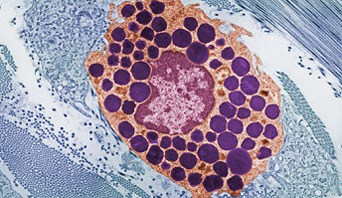
Best known of these mediator substances is histamine. Others include heparin, serotonin, kanins, arachidonic acid and. Apart from histamine and heparin (which prevents blood clotting), not much is known about the pharmacological effect of these substances.
Histamine
Histamine has two main modes of action on the body. This presupposes two kinds of ‘receptors’, which we call H1 and H2. H1 reactions are related to the classic allergic reaction and include increased capillary permeability, vaso-dilatation and smooth muscle contraction. Capillary permeability and vaso-dilatation can lead to massive fluid loss from the circulation, resulting in anaphylactic shock. Smooth muscle contraction is responsible for bronchospasm, as seen in asthma.
H1 receptors are blacked by antihistamines. H2 receptors lead mainly to the increased secretion of stomach acid; they are blocked by drugs such as cimetidine (Tagamet).
Histamine in Food
Many foods contain histamine, usually in only small amounts. Red wine has many times more histamine than white, which may be why it is more prone to cause headache and somnolence. Histamine levels in food can rise while the food is in storage. This results from the conversion of histidine to histamine in the food by bacteria.
Foods that may contain histamine include ‘mould’ foods such as cheese and sauer-kraut as well as a number of manufactured foods, including sausages. Large amounts of histamine usually occur only in old, fermented products or those that have undergone spoilage.
Scombroid fish poisoning (or scombrotoxin illness) is a condition that arises from eating badly stored scombroid fish (such as mackerel) containing high levels of histamine. The symptoms, which cannot be distinguished clinically from an allergic reaction, may be provoked by canned, uncanned and smoked fish; they include urticaria (raised, itchy patches of skin), nausea, vomiting, facial flushing, intense headache, epigastric pain, a burning sensation in the throat, dysphagia (difficulty swallowing), thirst and a swelling of the lips.
For asthmatics and those who suffer from giant urticaria, it might be best to avoid cheeses and certainly no aged or suspect food should be eaten, especially if it is fermented. Patients may interpret reactions incorrectly as meaning they are not. However, the unpleasant and potentially dangerous end-result is the same. With care, it may be possible for some individuals to retain such items in their diet, providing they buy and eat them fresh.
Other food toxin reactions, such as shellfish poisoning and ptomain poisoning, can also be mistaken for an allergy.
Leave a Reply
You must be logged in to post a comment.